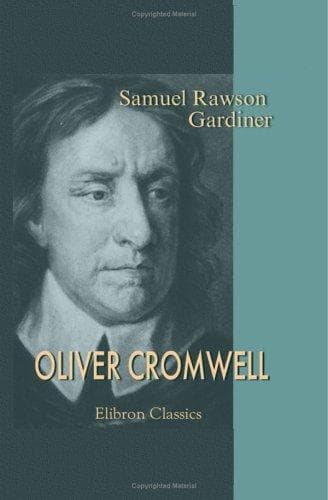
Cromwell, Oliver, 1599-1658; Great Britain -- History -- Commonwealth and Protectorate, 1649-1660
The immediate result of Charles's resolution to play with the great
questions at issue was an attempt by Cromwell and the officers to
come to terms with the Levellers. On October 28 a meeting of the Army
Council was held in Putney Church, to which several civilian Levellers
were admitted, the most prominent of whom was Wildman, formerly a major
in a now-disbanded regiment. Fairfax being out of health, Cromwell
took the chair. The Agitators put the question in a common-sense
form. "We sought," one of them said, "to satisfy all men, and it was
well; but, in going to do it, we have dissatisfied all men. We have
laboured to please the King; and, I think, except we go about to cut
all our throats, we shall not please him; and we have gone to support
a House which will prove rotten studs.[D] I mean the Parliament, which
consists of a company of rotten members." Cromwell and Ireton--they
continued--had attempted to settle the kingdom on the foundations of
King and Parliament, but it was to be hoped that they would no longer
persist in this course. Ireton could but answer that he would never
join those who refused to 'attempt all ways that are possible to
preserve both, and to make good use, and the best use that can be of
both, for the kingdom'. The practical men had become dreamers, whilst
the dreamers had become practical men. The Levellers, at least, had a
definite proposal to make, whilst Cromwell and Ireton had none. Since
the appearance of _The Case of the Army_, the Agitators had reduced its
chief requirements into a short constitution of four articles, which
they called _The Agreement of the People_, intending, it would seem, to
send it round the country for subscription, thus submitting it to what,
in modern days, would be called a plebiscite, though apparently it was
to be a plebiscite in which only affirmative votes were to be recorded.
Nothing could be more logical than this attempt to find a basis of
authority in the popular will, if the other basis of authority, the
tradition of generations, was to be of necessity abandoned.
[D] _I.e._ props.
Public-domain text, read in full here on John Shaqi.
Reviews
Reviews
No reviews yet
Be the first to share your thoughts on this work.
Join the Discussion
Join the discussion
Sign in to leave a comment or review.
Sign InorCreate an account