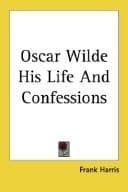
Oscar Wilde, His Life and Confessions — Volume 1Harris, Frank
History
Oscar Wilde, His Life and Confessions — Volume 1
Harris, Frank
Authors, Irish -- 19th century -- Biography; Wilde, Oscar, 1854-1900
"Of course I have heard most of the epigrams from you before, but you have put
them even better in this book."
"Do you think so, really?" he asked, smiling with pleasure.
It is worth notice that some of the epigrams in "Dorian Gray" were bettered
again before they appeared in his first play. For example, in "Dorian Gray"
Lord Henry Wotton, who is peculiarly Oscar's mouthpiece, while telling how he
had to bargain for a piece of old brocade in Wardour Street, adds, "nowadays
people know the price of everything and the value of nothing." In "Lady
Windermere's Fan" the same epigram is perfected, "The cynic is one who knows
the price of everything and the value of nothing."
Nearly all the literary productions of our time suffer from haste: one must
produce a good deal, especially while one's reputation is in the making, in
order to live by one's pen. Yet great works take time to form, and fine
creations are often disfigured by the stains of hurried parturition. Oscar
Wilde contrived to minimise this disability by talking his works before writing
them.
The conversation of Lord Henry Wotton with his uncle, and again at lunch when
he wishes to fascinate Dorian Gray, is an excellent reproduction of Oscar's
ordinary talk. The uncle wonders why Lord Dartmoor wants to marry an American
and grumbles about her people: "Has she got any?"
Lord Henry shook his head. "American girls are as clever at concealing their
parents as English women are at concealing their past," he said, rising to go.
"They are pork-packers, I suppose?"
"I hope so, Uncle George, for Dartmoor's sake. I am told that pork-packing is
the most lucrative profession in America, after politics."
All this seems to me delightful humour.
The latter part of the book, however, tails off into insignificance. The first
hundred pages held the result of months and months of Oscar's talk, the latter
half was written offhand to complete the story. "Dorian Gray" was the first
piece of work which proved that Oscar Wilde had at length found his true vein.
A little study of it discovers both his strength and his weakness as a writer.
The initial idea of the book is excellent, finer because deeper than the
commonplace idea that is the foundation of Balzac's "Peau de Chagrin," though
it would probably never have been written if Balzac had not written his
book first; but Balzac's sincerity and earnestness grapple with the theme and
wring a blessing out of it, whereas the subtler idea in Oscar's hands dwindles
gradually away till one wonders if the book would not have been more effective
as a short story. Oscar did not know life well enough or care enough for
character to write a profound psychological study: he was at his best in a
short story or play.
Public-domain text, read in full here on John Shaqi.
Reviews
Reviews
No reviews yet
Be the first to share your thoughts on this work.
Join the Discussion
Join the discussion
Sign in to leave a comment or review.
Sign InorCreate an account