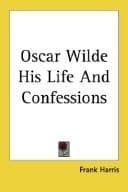
Oscar Wilde, His Life and Confessions — Volume 1Harris, Frank
History
Oscar Wilde, His Life and Confessions — Volume 1
Harris, Frank
Authors, Irish -- 19th century -- Biography; Wilde, Oscar, 1854-1900
One day I met a handsome youth in his company named John Gray, and I could not
wonder that Oscar found him interesting, for Gray had not only great personal
distinction, but charming manners and a marked poetic gift, a much greater gift
than Oscar possessed. He had besides an eager, curious mind, and of course
found extraordinary stimulus in Oscar's talk. It seemed to me that intellectual
sympathy and the natural admiration which a younger man feels for a brilliant
senior formed the obvious bond between them. But no sooner did Oscar republish
"Dorian Gray" than ill-informed and worse-minded persons went about saying that
the eponymous hero of the book was John Gray, though "Dorian Gray" was written
before Oscar had met or heard of John Gray. One cannot help admitting that this
was partly Oscar's own fault. In talk he often alluded laughingly to John Gray
as his hero, "Dorian." It is just an instance of the challenging contempt which
he began to use about this time in answer to the inventions of hatred.
Late in this year, 1891, he published four stories completely void of offence,
calling the collection "A House of Pomegranates." He dedicated each of the
tales to a lady of distinction and the book made many friends; but it was
handled contemptuously in the press and had no sale.
By this time people expected a certain sort of book from Oscar Wilde and wanted
nothing else. They hadn't to wait long. Early in 1892 we heard that Oscar had
written a drama in French called "Salome", and at once it was put about that
Sarah Bernhardt was going to produce it in London. Then came dramatic surprise
on surprise: while it was being rehearsed, the Lord Chamberlain refused to
license it on the ground that it introduced Biblical characters. Oscar
protested in a brilliant interview against the action of the Censor as "odious
and ridiculous." He pointed out that all the greatest artists--painters and
sculptors, musicians and writers--had taken many of their best subjects from the
Bible, and wanted to know why the dramatist should be prevented from treating
the great soul-tragedies most proper to his art. When informed that the
interdict was to stand, he declared in a pet that he would settle in France and
take out letters of naturalisation:
"I am not English. I am Irish--which is quite another thing." Of course the
press made all the fun it could of his show of temper.
Mr. Robert Ross considers "Salome" "the most powerful and perfect of all Oscar's
dramas." I find it almost impossible to explain, much less justify, its
astonishing popularity. When it appeared, the press, both in France and in
England, was critical and contemptuous; but by this time Oscar had so captured
the public that he could afford to disdain critics and calumny. The play was
praised by his admirers as if it had been a masterpiece, and London discussed it
the more because it was in French and not clapper-clawed by the vulgar.
Public-domain text, read in full here on John Shaqi.
Reviews
Reviews
No reviews yet
Be the first to share your thoughts on this work.
Elsewhere in the archive
Join the Discussion
Join the discussion
Sign in to leave a comment or review.
Sign InorCreate an account