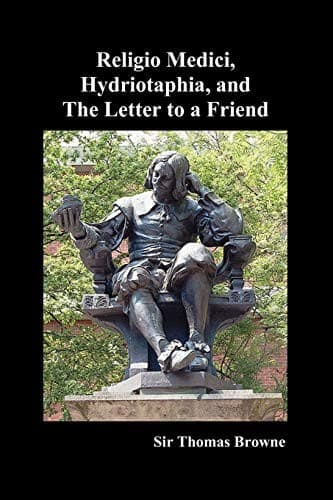
Religio Medici, Hydriotaphia, and the Letter to a FriendBrowne, Thomas, Sir
Religion
Religio Medici, Hydriotaphia, and the Letter to a Friend
Browne, Thomas, Sir
Christian ethics; Christian life; Essays; Funeral rites and ceremonies; Medical ethics; Medicine -- History; Religion and medicine
_Sect._ 53.--And to be true, and speak my soul, when I survey the
occurrences of my life, and call into account the finger of God, I can
perceive nothing but an abyss and mass of mercies, either in general to
mankind, or in particular to myself. And, whether out of the prejudice
of my affection, or an inverting and partial conceit of his mercies, I
know not,--but those which others term crosses, afflictions, judgments,
misfortunes, to me, who inquire further into them than their visible
effects, they both appear, and in event have ever proved, the secret
and dissembled favours of his affection. It is a singular piece of
wisdom to apprehend truly, and without passion, the works of God, and
so well to distinguish his justice from his mercy as not to miscall
those noble attributes; yet it is likewise an honest piece of logick so
to dispute and argue the proceedings of God as to distinguish even his
judgments into mercies. For God is merciful unto all, because better
to the worst than the best deserve; and to say he punisheth none in
this world, though it be a paradox, is no absurdity. To one that hath
committed murder, if the judge should only ordain a fine, it were a
madness to call this a punishment, and to repine at the sentence,
rather than admire the clemency of the judge. Thus, our offences being
mortal, and deserving not only death but damnation, if the goodness of
God be content to traverse and pass them over with a loss, misfortune,
or disease; what frenzy were it to term this a punishment, rather than
an extremity of mercy, and to groan under the rod of his judgments
rather than admire the sceptre of his mercies! Therefore to adore,
honour, and admire him, is a debt of gratitude due from the obligation
of our nature, states, and conditions: and with these thoughts he that
knows them best will not deny that I adore him. That I obtain heaven,
and the bliss thereof, is accidental, and not the intended work of my
devotion; it being a felicity I can neither think to deserve nor scarce
in modesty to expect. For these two ends of us all, either as rewards
or punishments, are mercifully ordained and disproportionably disposed
unto our actions; the one being so far beyond our deserts, the other so
infinitely below our demerits.
Public-domain text, read in full here on John Shaqi.
Reviews
Reviews
No reviews yet
Be the first to share your thoughts on this work.
Elsewhere in the archive
Join the Discussion
Join the discussion
Sign in to leave a comment or review.
Sign InorCreate an account