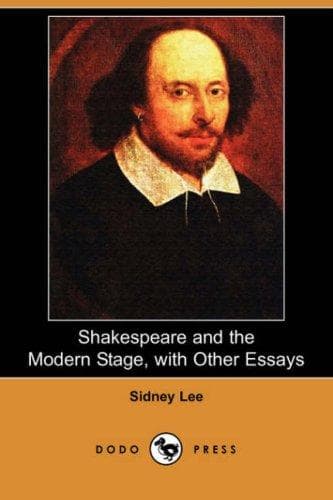
Shakespeare and the Modern Stage; with Other EssaysLee, Sidney, Sir
History
Shakespeare and the Modern Stage; with Other Essays
Lee, Sidney, Sir
Shakespeare, William, 1564-1616; Shakespeare, William, 1564-1616 -- Stage history
What is the moral to be deduced from any examination of the
Elizabethan playgoer's attitude to Shakespeare's plays? It is
something of this kind. We must emulate our ancestors' command of the
imagination. We must seek to enlarge our imaginative sympathy with
Shakespeare's poetry. The imaginative faculty will not come to us at
our call; it will not come to us by the mechanism of study; it may not
come to us at all. It is easier to point out the things that will
hinder than the things that will hasten its approach. Absorption in
the material needs of life, the concentration of energy on the
increase of worldly goods, leave little room for the entrance into the
brain of the imaginative faculty, or for its free play when it is
there. The best way of seeking it is by reading the greatest of great
imaginative literature, by freely yielding the mind to its influence,
and by exercising the mind under its sway. And the greatest
imaginative literature that was ever penned was penned by Shakespeare.
No counsel is wiser than that of those two personal friends of his,
who were the first editors of his work, and penned words to this
effect: "Read him therefore, and again and again, and then if you do
not like him, surely you are in some manifest danger" of losing a
saving grace of life.
III
SHAKESPEARE IN ORAL TRADITION[9]
[Footnote 9: This paper was first printed in _The Nineteenth Century
and After_, February 1902.]
I
Biographers did not lie in wait for men of eminence on their
death-beds in Shakespeare's epoch. To the advantage of literature, and
to the less than might be anticipated disadvantage of history (for
your death-bed biographer, writing under kinsfolk's tear-laden eyes,
must needs be smoother-tongued than truthful), the place of the modern
memoir-writer was filled in Shakespeare's day by friendly poets, who
were usually alert to pay fit homage in elegiac verse to a dead hero's
achievements. In that regard, Shakespeare's poetic friends showed at
his death exceptional energy. During his lifetime men of letters had
bestowed on his "reigning wit," on his kingly supremacy of genius,
most generous stores of eulogy. Within two years of the end a
sonneteer had justly deplored that something of Shakespeare's own
power, to which he deprecated pretension, was needful to those who
should praise him aright. But when Shakespeare lay dead in the spring
of 1616, when, as one of his admirers technically phrased it, he had
withdrawn from the stage of the world to the "tiring-house" or
dressing-room of the grave, the flood of panegyrical lamentation was
not checked by the sense of literary inferiority which in all
sincerity oppressed the spirits of surviving companions.
Public-domain text, read in full here on John Shaqi.
Reviews
Reviews
No reviews yet
Be the first to share your thoughts on this work.
Join the Discussion
Join the discussion
Sign in to leave a comment or review.
Sign InorCreate an account