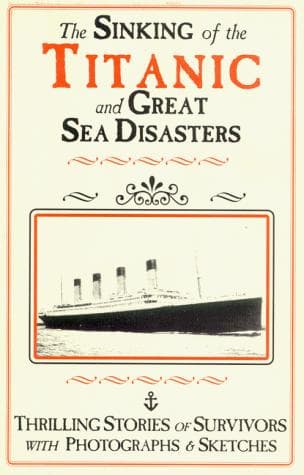
Shipwrecks -- North Atlantic Ocean; Titanic (Steamship)
SCANTILY CLAD WOMEN IN LIFE-BOATS
"The women on our boat were in nightgowns and bare feet--some of
them--and the wealthiest women mingled with the poorest immigrants. One
immigrant woman kept shouting: 'My God, my poor father! He put me in
this boat and would not save himself. Oh, why didn't I die, why didn't I
die? Why can't I die now?'
"We had to restrain her, else she would have jumped over-board. It was
simply awful. Some of the men apparently had said they could row just to
get into the boats. We paid no attention to cowardice, however. We were
all busy with our own troubles. My heart simply bled for the women who
were separated from their husbands.
"The night was frightfully cold, although clear. We had to huddle
together to keep warm. Everybody drank sparingly of the water and
ate sparingly of the bread. We did not know when we would be saved.
Everybody tried to remain cool, except the poor creatures who could
think of nothing but their own great loss. Those with the most brains
seemed to control themselves best."
PHILADELPHIA WOMEN HEROINES
How Mrs. George D. Widener, whose husband and son perished after kissing
her good-bye and helping her into one of the boats, rowed when exhausted
seamen were on the verge of collapse, was told by Emily Geiger, maid of
Mrs. Widener, who was saved with her.
The girl said Mrs. Widener bravely toiled throughout the night and
consoled other women who had broken down under the strain.
Mrs. William E. Carter and Mrs. John B. Thayer were in the same
life-boat and worked heroically to keep it free from the icy menace.
Although Mrs. Thayer's husband remained aboard the Titanic and sank with
it, and although she had no knowledge of the safety of her son until
they met, hours later, aboard the Carpathia, Mrs. Thayer bravely labored
at the oars throughout the night.
In telling of her experience Mrs. Carter said:
"When I went over the side with my children and got in the boat there
were no seamen in it. Then came a few men, but there were oars with no
one to use them. The boat had been filled with passengers, and there was
nothing else for me to do but to take an oar.
"We could see now that the time of the ship had come. She was sinking,
and we were warned by cries from the men above to pull away from
the ship quickly. Mrs. Thayer, wife of the vice-president of the
Pennsylvania Railroad, was in my boat, and she, too, took an oar.
"It was cold and we had no time to clothe ourselves with warm overcoats.
The rowing warmed me. We started to pull away from the ship. We could
see the dim outlines of the decks above, but we could not recognize
anybody."
MANY WOMEN ROWING
Mrs. William R. Bucknell's account of the part women played in the
rowing is as follows:
"There were thirty-five persons in the boat in which the captain placed
me. Three of these were ordinary seamen, supposed to manage the boat,
and a steward.
Public-domain text, read in full here on John Shaqi.
Reviews
Reviews
No reviews yet
Be the first to share your thoughts on this work.
Join the Discussion
Join the discussion
Sign in to leave a comment or review.
Sign InorCreate an account