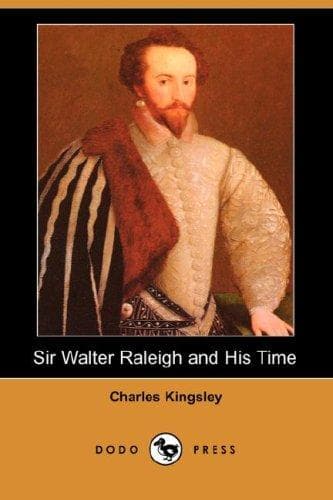
Great Britain -- History; Raleigh, Walter, Sir, 1552?-1618
B. Zedoary and Saffron, each ½ lb.
Distilled water 3 pints.
Macerate, etc., and reduce to 1½ pint.
Compound powder of crabs’ claws 16 oz.
Cinnamon and Nutmegs 2 oz.
Cloves 1 oz.
Cardamom seeds ½ oz.
Double refined sugar 2 lb.
Make a confection.
Which, so the world believes, will cure all ills which flesh is heir to.
It does not seem that Raleigh so boasted himself; but the people, after
the fashion of the time, seem to have called all his medicines
‘cordials,’ and probably took for granted that it was by this particular
one that the enchanter cured Queen Anne of a desperate sickness, ‘whereof
the physicians were at the farthest end of their studies’ (no great way
to go in those days) ‘to find the cause, and at a nonplus for the cure.’
Raleigh—this is Sir Anthony Welden’s account, which may go for what it is
worth—asks for his reward, only justice. Will the Queen ask that certain
lords may be sent to examine Cobham, ‘whether he had at any time accused
Sir Walter of any treason under his hand?’ Six are sent. Cobham
answers, ‘Never; nor could I: that villain Wade often solicited me, and
not so prevailing, got me by a trick to write my name on a piece of white
paper. So that if a charge come under my hand it was forged by that
villain Wade, by writing something above my hand, without my consent or
knowledge.’ They return. An equivocation was ready. ‘Sir, my Lord
Cobham has made good all that ever he wrote or said’; having, by his own
account, written nothing but his name. This is Sir Anthony Welden’s
story. One hopes, for the six lords’ sake, it may not be true; but there
is no reason, in the morality of James’s court, why it should not have
been.
Public-domain text, read in full here on John Shaqi.
Reviews
Reviews
No reviews yet
Be the first to share your thoughts on this work.
Join the Discussion
Join the discussion
Sign in to leave a comment or review.
Sign InorCreate an account