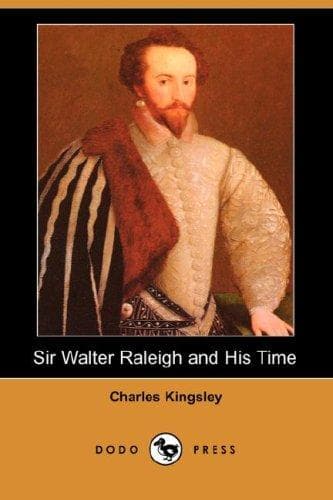
Great Britain -- History; Raleigh, Walter, Sir, 1552?-1618
‘They may get who have the will,
And they may keep who can.’
But it does seem hard on Raleigh, after having laboured in this Guiana
business for years, and after having spent his money in vain attempts to
deliver these Guianians from their oppressors. It is hard, and he feels
it so. He sees that he is not trusted; that, as James himself confesses,
his pardon is refused simply to keep a hold on him; that, if he fails, he
is ruined.
As he well asks afterwards, ‘If the King did not think that Guiana was
his, why let me go thither at all? He knows that it was his by the law
of nations, for he made Mr. Harcourt a grant of part of it. If it be, as
Gondomar says, the King of Spain’s, then I had no more right to work a
mine in it than to burn a town.’ An argument which seems to me
unanswerable. But, says James, and others with him, he was forbid to
meddle with any country occupate or possessed by Spaniards. Southey,
too, blames him severely for not having told James that the country was
already settled by Spaniards. I can excuse Southey, but not James, for
overlooking the broad fact that all England knew it, as I have shown,
since 1594; that if they did not, Gondomar would have taken care to tell
them; and that he could not go to Guiana without meddling with Spaniards.
His former voyages and publications made no secret of it. On the
contrary, one chief argument for the plan had been all through the
delivery of the Indians from these very Spaniards, who, though they could
not conquer them, ill-used them in every way: and in his agreement with
the Lords about the Guiana voyage in 1611, he makes especial mention of
the very place which will soon fill such a part in our story, ‘San Thomé,
where the Spaniards inhabit,’ and tells the Lords whom to ask as to the
number of men who will be wanted ‘to secure Keymish’s passage to the
mine’ against these very Spaniards. What can be more clear, save to
those who will not see?
The plain fact is that Raleigh went, with his eyes open, to take
possession of a country to which he believed that he and King James had a
right, and that James and his favourites, when they, as he pleads, might
have stopped him by a word, let him go, knowing as well as the Spaniards
what he intended; for what purpose, but to have an excuse for the tragedy
which ended all, it is difficult to conceive. ‘It is evident,’ wisely
says Sir Robert Schomburgk, ‘that they winked at consequences which they
must have foreseen.’
Public-domain text, read in full here on John Shaqi.
Reviews
Reviews
No reviews yet
Be the first to share your thoughts on this work.
Join the Discussion
Join the discussion
Sign in to leave a comment or review.
Sign InorCreate an account