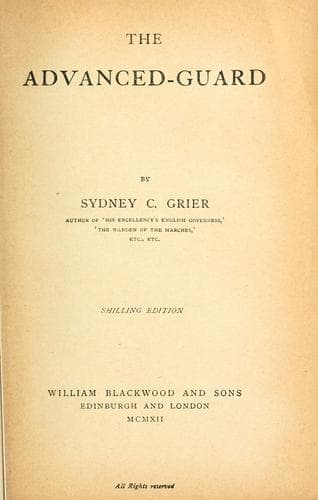
British -- Asia -- Fiction; Man-woman relationships -- Fiction; Soldiers -- Fiction
Sir Henry Lennox had resigned his post, and the military despotism
in Khemistan proper was at an end. The Europeans at Alibad journeyed
in two detachments to the port on the river to bid farewell to the old
warrior, who was making his last triumphal progress amid the tears and
lamentations of the people to whom, according to his enemies and their
newspapers, his name was a signal for universal execration. The
General and his flotilla of steamers passed on, and Major Keeling
returned to Alibad, refusing to be comforted. The epoch of the soldier
was over, that of the civilian had begun, and, like his old commander,
he detested civilians as a class, without prejudice to certain
favoured individuals, with a furious hatred. Mr Crayne, the newly
appointed Commissioner, was not only a civilian but a man of such an
awkward temper that it was said his superiors and contemporaries at
Bombay had united to thrust the post upon him. It was not his by
seniority, but they would have been willing to see him made
Governor-General if it would remove him from their immediate
neighbourhood. In him Major Keeling perceived a foeman worthy of his
steel, and before the new ruler had fairly arrived in the province,
they were embarked upon a fierce paper warfare over almost every point
of Mr Crayne’s inaugural utterance. After a hard day’s work, it was a
positive refreshment to the soldier to sit down and compose a fiery
letter to his obnoxious superior; and since he was one of those to
whom experience brings little wisdom, he repeated with zest the old
mistake which had made him a by-word in official circles. More than
once in former years, when he thought he had made a specially good
point in a controversy of this kind, or forced his opponent into a
particularly untenable corner, he had sent the correspondence to the
Bombay papers, which were ready enough to print it, salving their
consciences by printing also scathing remarks on the sender. They gave
him no sympathy, and the military authorities sent him stinging
rebukes; but as if by a kind of fatality he did the same thing over
again as often as circumstances made it possible. His friends and
subordinates looked on with fear and trembling, and whispered that the
only reason he was still in the service was the fact that no one else
could keep the frontier quiet: his enemies chuckled while they
writhed, and said that the man was hard at work twisting the rope to
hang himself, and it must be long enough soon.
Public-domain text, read in full here on John Shaqi.
Reviews
Reviews
No reviews yet
Be the first to share your thoughts on this work.
Elsewhere in the archive
Join the Discussion
Join the discussion
Sign in to leave a comment or review.
Sign InorCreate an account