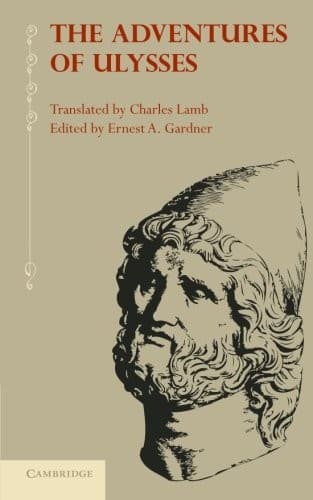
Homer. Odyssey -- Adaptations; Odysseus, King of Ithaca (Mythological character) -- Juvenile literature
From the house of Eumaeus the seeming beggar took his way, leaning on his
staff, till he reached the palace, entering in at the hall where the
suitors sat at meat. They in the pride of their feasting began to break
their jests in mirthful manner, when they saw one looking so poor and so
aged approach. He, who expected no better entertainment, was nothing moved
at their behaviour, but, as became the character which he had assumed, in
a suppliant posture crept by turns to every suitor, and held out his hands
for some charity, with such a natural and beggar-resembling grace that he
might seem to have practised begging all his life; yet there was a sort of
dignity in his most abject stoopings, that whoever had seen him would have
said, If it had pleased Heaven that this poor man had been born a king, he
would gracefully have filled a throne. And some pitied him, and some gave
him alms, as their present humours inclined them, but the greater part
reviled him, and bade him begone, as one that spoiled their feast; for the
presence of misery has this power with it, that, while it stays, it can
ash and overturn the mirth even of those who feel no pity or wish to
relieve it: nature bearing this witness of herself in the hearts of the
most obdurate.
[Illustration: _But the greater part reviled him and bade him begone_.]
Now Telemachus sat at meat with the suitors, and knew that it was the king
his father who in that shape begged an alms; and when his father came and
presented himself before him in turn, as he had done to the suitors one by
one, he gave him of his own meat which he had in his dish, and of his own
cup to drink. And the suitors were past measure offended to see a pitiful
beggar, as they esteemed him, to be so choicely regarded by the prince.
Then Antinous, who was a great lord, and of chief note among the suitors,
said, "Prince Telemachus does ill to encourage these wandering beggars,
who go from place to place, affirming that they have been some
considerable persons in their time, filling the ears of such as hearken to
them with lies, and pressing with their bold feet into kings' palaces.
This is some saucy vagabond, some travelling Egyptian."
"I see," said Ulysses, "that a poor man should get but little at your
board; scarce should he get salt from your hands, if he brought his own
meat."
Lord Antinous, indignant to be answered with such sharpness by a supposed
beggar, snatched up a stool, with which he smote Ulysses where the neck
and shoulders join. This usage moved not Ulysses; but in his great heart
he meditated deep evils to come upon them all, which for a time must be
kept close, and he went and sat himself down in the door-way to eat of
that which was given him; and he said, "For life or possessions a man will
fight, but for his belly this man smites. If a poor man has any god to
take his part, my lord Antinous shall not live to be the queen's husband."
Public-domain text, read in full here on John Shaqi.
Reviews
Reviews
No reviews yet
Be the first to share your thoughts on this work.
Join the Discussion
Join the discussion
Sign in to leave a comment or review.
Sign InorCreate an account