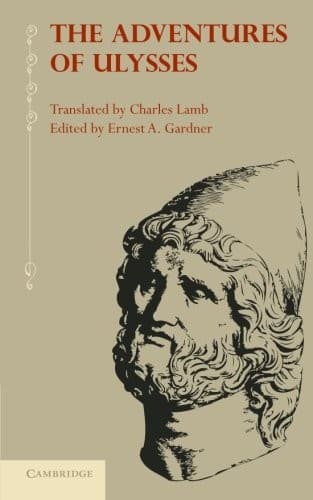
Homer. Odyssey -- Adaptations; Odysseus, King of Ithaca (Mythological character) -- Juvenile literature
Then Antinous raged highly, and threatened to drag him by the heels, and
to rend his rags about his ears, if he spoke another word.
But the other suitors did in nowise approve of the harsh language, nor of
the blow which Antinous had dealt; and some of them said, "Who knows but
one of the deities goes about hid under that poor disguise? for in the
likeness of poor pilgrims the gods have many times descended to try the
dispositions of men, whether they be humane or impious." While these
things passed, Telemachus sat and observed all, but held his peace,
remembering the instructions of his father. But secretly he waited for the
sign which Minerva was to send from heaven.
That day there followed Ulysses to the court one of the common sort of
beggars, Irus by name, one that had received alms beforetime of the
suitors, and was their ordinary sport, when they were inclined (as that
day) to give way to mirth, to see him eat and drink; for he had the
appetite of six men, and was of huge stature and proportions of body; yet
had in him no spirit nor courage of a man. This man, thinking to curry
favour with the suitors, and recommend himself especially to such a great
lord as Antinous was, began to revile and scorn Ulysses, putting foul
language upon him, and fairly challenging him to fight with the fist. But
Ulysses, deeming his railings to be nothing more than jealousy and that
envious disposition which beggars commonly manifest to brothers in their
trade, mildly besought him not to trouble him, but to enjoy that portion
which the liberality of their entertainers gave him, as he did quietly;
seeing that, of their bounty, there was sufficient for all.
But Irus, thinking that this forbearance in Ulysses was nothing more than
a sign of fear, so much the more highly stormed, and bellowed, and
provoked him to fight; and by this time the quarrel had attracted the
notice of the suitors, who with loud laughters and shouting egged on the
dispute, and lord Antinous swore by all the gods it should be a battle,
and that in that hall the strife should be determined. To this the rest of
the suitors with violent clamours acceded, and a circle was made for the
combatants, and a fat goat was proposed as the victor's prize, as at the
Olympic or the Pythian games. Then Ulysses, seeing no remedy, or being not
unwilling that the suitors should behold some proof of that strength which
ere long in their own persons they were to taste of, stripped himself, and
prepared for the combat. But first he demanded that he should have fair
play shown him, that none in that assembly should aid his opponent, or
take part against him, for, being an old man, they might easily crush him
with their strengths. And Telemachus passed his word that no foul play
should be shown him, but that each party should be left to their own
unassisted strengths, and to this he made Antinous and the rest of the
suitors swear.
Public-domain text, read in full here on John Shaqi.
Reviews
Reviews
No reviews yet
Be the first to share your thoughts on this work.
Join the Discussion
Join the discussion
Sign in to leave a comment or review.
Sign InorCreate an account