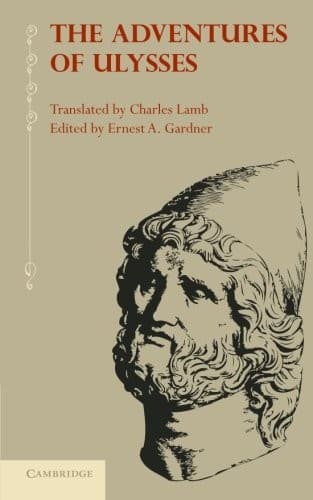
Homer. Odyssey -- Adaptations; Odysseus, King of Ithaca (Mythological character) -- Juvenile literature
But Theoclymenus (for that was the prophet's name), whom Minerva had
graced with a prophetic spirit, that he foreseeing might avoid the
destruction which awaited them, answered and said: "Eurymachus, I will not
require a guide of thee, for I have eyes and ears, the use of both my
feet, and a sane mind within me, and with these I will go forth of the
doors, because I know the imminent evils which await all you that stay, by
reason of this poor guest who is a favourite with all the gods." So
saying, he turned his back upon those inhospitable men, and went away
home, and never returned to the palace.
These words which he spoke were not unheard by Telemachus, who kept still
his eye upon his father, expecting fervently when he would give the sign
which was to precede the slaughter of the suitors.
They, dreaming of no such thing, fell sweetly to their dinner, as joying
in the great store of banquet which was heaped in full tables about them;
but there reigned not a bitterer banquet planet in all heaven than that
which hung over them this day by secret destination of Minerva.
There was a bow which Ulysses left when he went for Troy. It had lain by
since that time, out of use and unstrung, for no man had strength to draw
that bow, save Ulysses. So it had remained, as a monument of the great
strength of its master. This bow, with the quiver of arrows belonging
thereto, Telemachus had brought down from the armoury on the last night
along with the lances; and now Minerva, intending to do Ulysses an honour,
put it into the mind of Telemachus to propose to the suitors to try who
was strongest to draw that bow; and he promised that to the man who should
be able to draw that bow his mother should be given in marriage--Ulysses's
wife the prize to him who should bend the bow of Ulysses.
There was great strife and emulation stirred up among the suitors at those
words of the prince Telemachus. And to grace her son's words, and to
confirm the promise which he had made, Penelope came and showed herself
that day to the suitors; and Minerva made her that she appeared never so
comely in their sight as that day, and they were inflamed with the
beholding of so much beauty, proposed as the price of so great manhood;
and they cried out that if all those heroes who sailed to Colchis for the
rich purchase of the golden-fleeced ram had seen earth's richer prize,
Penelope, they would not have made their voyage, but would have vowed
their valours and their lives to her, for she was at all parts faultless.
And she said, "The gods have taken my beauty from me, since my lord went
for Troy." But Telemachus willed his mother to depart and not be present
at that contest; for he said, "It may be, some rougher strife shall chance
of this than may be expedient for a woman to witness." And she retired,
she and her maids, and left the hall.
Public-domain text, read in full here on John Shaqi.
Reviews
Reviews
No reviews yet
Be the first to share your thoughts on this work.
Elsewhere in the archive
Join the Discussion
Join the discussion
Sign in to leave a comment or review.
Sign InorCreate an account