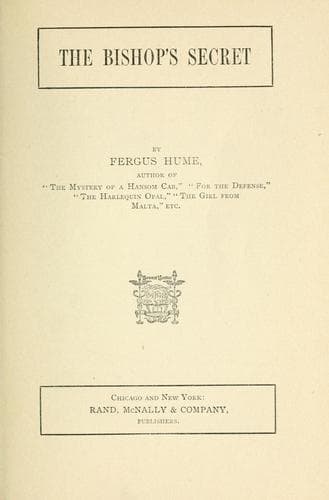
Clergy -- England -- Fiction; Detective and mystery stories
The great central tower rises to the height of two hundred feet in
square massiveness, and from this point springs a slender and graceful
spire to another hundred feet, so that next to Salisbury, the great
archetype of this special class of ecclesiastical architecture, it is
the tallest spire in England. Two square towers, richly ornamented,
embellish the western front, and beneath the great window over the
central entrance is a series of canopied arches. The church is cruciform
in shape, and is built of Portland stone, the whole being richly
ornamented with pinnacles, buttresses, crocketted spires and elaborate
tracery. Statues of saints, kings, queens and bishops are placed in
niches along the northern and southern fronts, and the western front
itself is sculptured with scenes from Holy Scripture in the quaint
grotesque style of mediaeval art. No ivy is permitted to conceal the
beauties of the building; and elevated in the clear air, far above the
smoke of the town, it looks as fresh and white and clean cut as though
it had been erected only within the last few years. Spared by Henry
VIII. and the iconoclastic rage of the Puritans, Time alone has dealt
with it; and Time has mellowed the whole to a pale amber hue which adds
greatly to the beauty of the mighty fane. Beorminster Cathedral is a
poem in stone.
Within, the nave and transepts are lofty and imposing, with innumerable
arches springing from massive marble pillars. The rood screen is ornate,
with figures of saints and patriarchs; the pavement is diversified with
brasses and carved marble slabs, and several Crusaders' tombs adorn the
side chapels. The many windows are mostly of stained glass, since these
were not destroyed by the Puritans; and when the sun shines on a
summer's day the twilight interior is dyed with rich hues and quaint
patterns. As the Bishop of Beorminster is a High Churchman the altar is
magnificently decorated, and during service, what with the light and
colour and brilliancy, the vast building seems--unlike the dead aspect
of many of its kind--to be filled with life and movement and living
faith. A Romanist might well imagine that he was attending one of the
magnificent and imposing services of his own faith, save that the
uttered words are spoken in the mother tongue.
Public-domain text, read in full here on John Shaqi.
Reviews
Reviews
No reviews yet
Be the first to share your thoughts on this work.
Join the Discussion
Join the discussion
Sign in to leave a comment or review.
Sign InorCreate an account