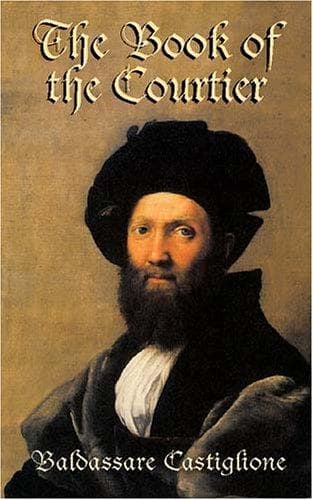
The Book of the CourtierCastiglione, Baldassarre, conte
History
The Book of the Courtier
Castiglione, Baldassarre, conte
Courtesy -- Early works to 1800; Courts and courtiers -- Early works to 1800
“And to multiply like examples, here is a man who handles weapons,
either about to throw a dart or holding a sword in his hand or other
weapon; if he nimbly and without thinking puts himself in an attitude of
readiness, with such ease that his body and all his members seem to fall
into that posture naturally and quite without effort,—although he do no
more, he will prove himself to everyone to be perfect in that exercise.
Likewise in dancing, a single step, a single movement of the person that
is graceful and not forced, soon shows the knowledge of the dancer. A
musician who in singing utters a single note ending with sweet tone in a
little group of four notes with such ease as to seem spontaneous, shows
by that single touch that he can do much more than he is doing. Often
too in painting, a single line not laboured, a single brush-stroke
easily drawn, so that it seems as if the hand moves unbidden to its aim
according to the painter’s wish, without being guided by care or any
skill, clearly reveals the excellence of the craftsman, which every man
appreciates according to his capacity for judging. And the same is true
of nearly everything else.
“Our Courtier then will be esteemed excellent and will attain grace in
everything, particularly in speaking, if he avoids affectation; into
which fault many fall, and often more than others, some of us Lombards;
who, if they have been a year away from home, on their return at once
begin to speak Roman, sometimes Spanish or French, and God knows how.
And all this comes from over zeal to appear widely informed; in such
fashion do men devote care and assiduity to acquiring a very odious
fault. And truly it would be no light task for me, if I were to try in
these discussions of ours to use those antique Tuscan words that are
quite rejected by the usage of the Tuscans of to-day; and besides I
think everyone would laugh at me.”
29.—Then messer Federico said:
“Of course in discussing among ourselves as we now are doing, perhaps it
would be amiss to use those antique Tuscan words, since (as you say)
they would be fatiguing to him who uttered them and to him who listened
to them, and by many would not be understood without difficulty. But if
one were writing, I should certainly think he would be wrong not to use
them, because they add much grace and authority to writing, and from
them there results a style more grave and full of majesty than from
modern words.”
Public-domain text, read in full here on John Shaqi.
Reviews
Reviews
No reviews yet
Be the first to share your thoughts on this work.
Join the Discussion
Join the discussion
Sign in to leave a comment or review.
Sign InorCreate an account