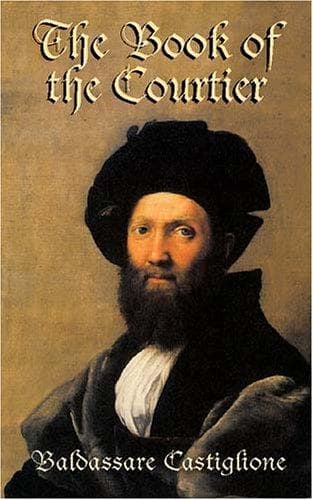
The Book of the CourtierCastiglione, Baldassarre, conte
History
The Book of the Courtier
Castiglione, Baldassarre, conte
Courtesy -- Early works to 1800; Courts and courtiers -- Early works to 1800
36.—“It is very true that in every language certain things are always
good, such as ease, good order, richness, beautiful sentences,
harmonious periods; and on the contrary affectation and other things
opposed to these, are bad. But among words there are some that remain
good for a time, then grow antiquated and wholly lose their grace;
others gain strength and come to be esteemed. For as the seasons of the
year despoil the earth of flowers and fruits and then clothe it anew
with others, so time causes those primal words to decay, and use makes
others to be born again and gives them grace and dignity, until they in
their turn meet their death, consumed by the envious gnawing of time;
for in the end both we and all our concerns are mortal. Consider that we
no longer have any knowledge of the Oscan tongue.[93] The Provençal,
although it may be said to have been but lately celebrated by noble
writers, is not now understood by the inhabitants of that country. Hence
I think, as my lord Magnifico has well said, that if Petrarch and
Boccaccio were alive at this time, they would not use many words that we
find in their writings: therefore it does not seem to me well for us to
copy these words. I applaud very highly those who know how to imitate
that which ought to be imitated, but I do not at all believe that it is
impossible to write well without imitating,—and particularly in this
language of ours, wherein we may be aided by usage: which I should not
dare say of Latin.”
37.—The messer Federico said:
“Why would you have usage more esteemed in the vernacular than in
Latin?”
“Nay,” replied the Count, “I esteem usage as mistress of both the one
and the other. But since those men to whom the Latin tongue was as
natural as the vernacular now is to us, are no longer on earth, we must
needs learn from their writings that which they learned from usage. Nor
does ancient speech mean anything more than ancient usage of speech, and
it would be a silly business to like ancient speech for no other reason
than a wish to speak as men used to speak rather than as they now
speak.”
“Then,” replied messer Federico, “the ancients did not imitate?”
“I believe,” said the Count, “that many of them did, but not in
everything. And if Virgil had imitated Hesiod in everything, he would
not have surpassed his master; nor Cicero, Crassus; nor Ennius, his
predecessors. You know Homer is so ancient that many believe he is the
first heroic poet in time as he is also in excellence of diction: and
whom would you think he imitated?”
“Some other poet,” replied messer Federico, “more ancient than he, of
whom we have no knowledge because of excessive antiquity.”
“Then whom,” said the Count, “would you say Petrarch and Boccaccio
imitated, who were on earth only three days since, one may say?”
“I know not,” replied messer Federico; “but we may believe that even
their minds were directed to imitation, although we do not know of
whom.”
The Count replied:
Public-domain text, read in full here on John Shaqi.
Reviews
Reviews
No reviews yet
Be the first to share your thoughts on this work.
Elsewhere in the archive
Join the Discussion
Join the discussion
Sign in to leave a comment or review.
Sign InorCreate an account