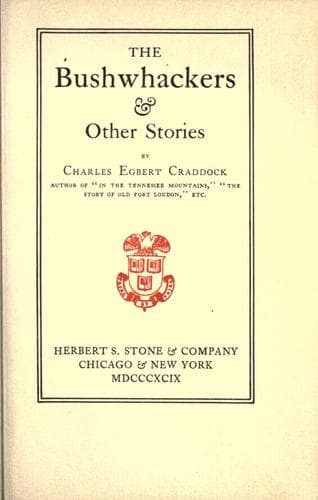
The bushwhackers & other storiesCraddock, Charles Egbert
General
The bushwhackers & other stories
Craddock, Charles Egbert
Mountain life -- Fiction; Tennessee -- Social life and customs -- Fiction
slope of a mountain hard by; the sky would show blue overhead, and
glimmer red through the low-hanging boughs toward the west; and the
troops would pitch their tents under the restored peace of the elements
and the placid white stars.
A jolly camp it must have been. Stories of it have come down to this
day--of its songs, loud, hilarious, patriotic, doubtless rudely
musical; of its wild pranks, of that boyish and jocose kind denominated
by sober and unsympathetic elders, “horse-play”; of the intense delight
experienced by the savage allies, the Chickasaws, who participated in
the campaign, in witnessing the dances of the young Highlanders--how
“their sprightly manner in this exercise,” and athletic grace appealed
to the Indians; how the sound of the bag-pipes thrilled them; how they
admired that ancient martial garb, the kilt and plaid.
No admiration, however extravagant of Scotch customs, character, or
appearance, seemed excessive in the eyes of Lieutenant-Colonel James
Grant, so readily did his haughty, patriotic pride acquiesce in it, and
the Indian’s evident appreciation of the national superiority of the
Scotch to all other races of men duly served to enhance his opinion of
the mental acumen of the Chickasaws. This homage, however, failed to
mollify or modify the estimate of the noble redman already formed by a
certain subaltern, Lieutenant Ronald MacDonnell.
“The Lord made him an Indian--and an Indian he will remain,” he would
remark sagely.
The policy of the British government to utilize in its armies
the martial strength of semi-savage dependencies, elsewhere so
conspicuously exploited, was never successful with these Indians save
as the tribes might fight in predatory bands in their own wild way,
although much effort was made looking toward regular enlistments.
And, in fact, the futility of all endeavors to reduce the savage to
a reasonable conformity to the militarism of the camp, to inculcate
the details of the drill, a sense of the authority of officers, the
obligations of out-posts, the heinousness of “running the guard,” the
necessity of submitting to the prescribed punishments and penalties
for disobedience of orders,--all rendered this ethnographic saw so
marvelously apt, that it seemed endowed with more wisdom than Ronald
MacDonnell was popularly supposed to possess. But such logic as he
could muster operated within contracted limits. If the Lord had not
fitted a man to be a soldier, why--there Ronald MacDonnell’s extremest
flights of speculation paused.
Public-domain text, read in full here on John Shaqi.
Reviews
Reviews
No reviews yet
Be the first to share your thoughts on this work.
Elsewhere in the archive
Join the Discussion
Join the discussion
Sign in to leave a comment or review.
Sign InorCreate an account