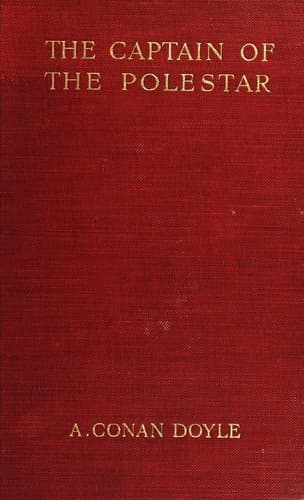
The Captain of the Polestar, and Other TalesDoyle, Arthur Conan
General
The Captain of the Polestar, and Other Tales
Doyle, Arthur Conan
Great Britain -- Social life and customs -- 19th century -- Fiction; Short stories, English
Five minutes passed, and then ten, and then fifteen, and then fifteen
more, while the Professor and his pupil sat stiff and stark upon the
platform. During that time not a sound was heard from the assembled
savants, but every eye was bent upon the two pale faces, in search of
the first signs of returning consciousness. Nearly an hour had elapsed
before the patient watchers were rewarded. A faint flush came back to
the cheeks of Professor von Baumgarten. The soul was coming back once
more to its earthly tenement. Suddenly he stretched out his long thin
arms, as one awaking from sleep, and rubbing his eyes, stood up from
his chair and gazed about him as though he hardly realised where he was.
“Tausend Teufel!” he exclaimed, rapping out a tremendous South German
oath, to the great astonishment of his audience and to the disgust of
the Swedenborgian. “Where the Henker am I then, and what in thunder
has occurred? Oh yes, I remember now. One of these nonsensical mesmeric
experiments. There is no result this time, for I remember nothing at all
since I became unconscious; so you have had all your long journeys for
nothing, my learned friends, and a very good joke too;” at which the
Regius Professor of Physiology burst into a roar of laughter and slapped
his thigh in a highly indecorous fashion. The audience were so enraged
at this unseemly behaviour on the part of their host, that there might
have been a considerable disturbance, had it not been for the judicious
interference of young Fritz von Hartmann, who had now recovered from
his lethargy. Stepping to the front of the platform, the young man
apologised for the conduct of his companion. “I am sorry to say,” he
said, “that he is a harum-scarum sort of fellow, although he appeared so
grave at the commencement of this experiment. He is still suffering from
mesmeric reaction, and is hardly accountable for his words. As to the
experiment itself, I do not consider it to be a failure. It is very
possible that our spirits may have been communing in space during this
hour; but, unfortunately, our gross bodily memory is distinct from our
spirit, and we cannot recall what has occurred. My energies shall now be
devoted to devising some means by which spirits may be able to recollect
what occurs to them in their free state, and I trust that when I have
worked this out, I may have the pleasure of meeting you all once again
in this hall, and demonstrating to you the result.” This address, coming
from so young a student, caused considerable astonishment among the
audience, and some were inclined to be offended, thinking that he
assumed rather too much importance. The majority, however, looked upon
him as a young man of great promise, and many comparisons were made as
they left the hall between his dignified conduct and the levity of
his professor, who during the above remarks was laughing heartily in a
corner, by no means abashed at the failure of the experiment.
Public-domain text, read in full here on John Shaqi.
Reviews
Reviews
No reviews yet
Be the first to share your thoughts on this work.
Join the Discussion
Join the discussion
Sign in to leave a comment or review.
Sign InorCreate an account