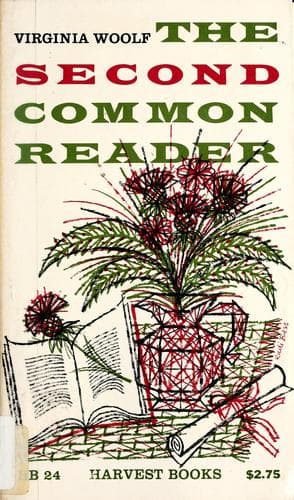
English literature -- History and criticism; Literature, Modern -- History and criticism
He had spent eighteen months in Newgate and talked with thieves,
pirates, highwaymen, and coiners before he wrote the history of Moll
Flanders. But to have facts thrust upon you by dint of living and
accident is one thing; to swallow them voraciously and retain the
imprint of them indelibly, is another. It is not merely that Defoe knew
the stress of poverty and had talked with the victims of it, but that
the unsheltered life, exposed to circumstances and forced to shift for
itself, appealed to him imaginatively as the right matter for his art.
In the first pages of each of his great novels he reduces his hero or
heroine to such a state of unfriended misery that their existence must
be a continued struggle, and their survival at all the result of luck
and their own exertions. Moll Flanders was born in Newgate of a criminal
mother; Captain Singleton was stolen as a child and sold to the gipsies;
Colonel Jack, though “born a gentleman, was put ’prentice to a
pickpocket”; Roxana starts under better auspices, but, having married at
fifteen, she sees her husband go bankrupt and is left with five children
in “a condition the most deplorable that words can express”.
Thus each of these boys and girls has the world to begin and the battle
to fight for himself. The situation thus created was entirely to Defoe’s
liking. From her very birth or with half a year’s respite at most, Moll
Flanders, the most notable of them, is goaded by “that worst of devils,
poverty”, forced to earn her living as soon as she can sew, driven from
place to place, making no demands upon her creator for the subtle
domestic atmosphere which he was unable to supply, but drawing upon him
for all he knew of strange people and customs. From the outset the
burden of proving her right to exist is laid upon her. She has to depend
entirely upon her own wits and judgement, and to deal with each
emergency as it arises by a rule-of-thumb morality which she has forged
in her own head. The briskness of the story is due partly to the fact
that having transgressed the accepted laws at a very early age she has
henceforth the freedom of the outcast. The one impossible event is that
she should settle down in comfort and security. But from the first the
peculiar genius of the author asserts itself, and avoids the obvious
danger of the novel of adventure. He makes us understand that Moll
Flanders was a woman on her own account and not only material for a
succession of adventures. In proof of this she begins, as Roxana also
begins, by falling passionately, if unfortunately, in love. That she
must rouse herself and marry some one else and look very closely to her
settlements and prospects is no slight upon her passion, but to be laid
to the charge of her birth; and, like all Defoe’s women, she is a person
of robust understanding. Since she makes no scruple of telling lies when
they serve her purpose, there is something undeniable about her truth
when she speaks it.
Public-domain text, read in full here on John Shaqi.
Reviews
Reviews
No reviews yet
Be the first to share your thoughts on this work.
Elsewhere in the archive
Join the Discussion
Join the discussion
Sign in to leave a comment or review.
Sign InorCreate an account