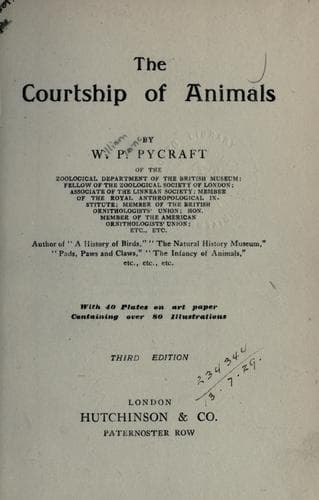
The Courtship of AnimalsPycraft, W. P. (William Plane)
Science
The Courtship of Animals
Pycraft, W. P. (William Plane)
Animal behavior; Natural selection
Among the larger Carnivora, the Lion alone displays any obvious
distinction between the sexes in the matter of ornament, and this in
the form of the well-known mane. Darwin, and later authorities, have
regarded this as a shield to protect the great blood-vessels from
injury during battles between rivals. But it is not very clear that
this alone is sufficient to explain its presence, inasmuch as the Tiger
in this respect is defenceless. Mr. F. C. Selous long ago pointed out
that the varying abundance of the mane is due to climatic causes. Lions
which live in districts where the nights are very cold, as in high
table-lands, have large manes; those which occupy lower ground, where
the nights are relatively warm, have but a scanty mane. It is clear,
however, that the abundance of the mane is not determined by the need
for warmth, otherwise it would have been as well developed in the
female. Rather we must regard a low temperature as conducive to the
growth of long hair when a natural tendency to produce this is present.
There are few men who can claim to have so great a first-hand
acquaintance with Lions as Mr. Selous, and he has pointed out to me
one significant fact which seems to show not only that the mane has
not been developed to serve as a shield when fighting, but that fights
between rival males must be rare. And this because of the absence
of any evidence in the shape of scars on the skin. With claws so
formidable as those of the lion, ugly wounds would certainly be made in
any prolonged conflicts, for the skin of this animal is very thin.
In the now extinct Sabre-toothed Tiger the upper canines were of
enormous length, and it is not improbable that they, on this account,
exceeded the bounds of usefulness; that, while as weapons of offence
they may have proved exceedingly effective, yet they hampered the
animal when feeding. In many ways one is reminded by these weapons of
the huge tusks of the Walrus. These are blunt-pointed, and are said
to be used very largely for digging up the large clams and other
burrowing shell-fish on which this animal mainly feeds. They are also
used as levers to drag the huge body out of the water on to the ice.
As fighting weapons they are formidable, and the wounds they inflict
are sometimes serious. The polygamous habits of this huge creature may
account for the fact that they are so much larger in the males, wherein
they may attain a length of thirty inches, and a weight of eight pounds
a-piece.
Public-domain text, read in full here on John Shaqi.
Reviews
Reviews
No reviews yet
Be the first to share your thoughts on this work.
Join the Discussion
Join the discussion
Sign in to leave a comment or review.
Sign InorCreate an account