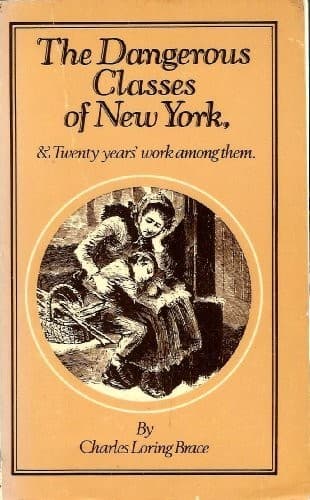
The Dangerous Classes of New York, and Twenty Years' Work Among ThemBrace, Charles Loring
History
The Dangerous Classes of New York, and Twenty Years' Work Among Them
Brace, Charles Loring
Child welfare -- New York (State) -- New York; New York (N.Y.) -- Social conditions; Poor -- New York (State) -- New York
"As Christian men, we cannot look upon this great multitude of unhappy,
deserted, and degraded boys and girls without feeling our responsibility
to God for them. We remember that they have the same capacities, the
same need of kind and good influences, and the same Immortality as the
little ones in our own homes. We bear in mind that One died for them,
even as for the children of the rich and happy. Thus far, alms-houses
and prisons have done little to affect the evil. But a small part of the
vagrant population can be shut up in our asylums, and judges and
magistrates are reluctant to convict children so young and ignorant that
they hardly seem able to distinguish good and evil. The class increases.
Immigration is pouring in its multitude of poor foreigners, who leave
these young outcasts everywhere abandoned in our midst. For the most
part, the boys grow up utterly by themselves. No one cares for them, and
they care for no one. Some live by begging, by petty pilfering, by bold
robbery; some earn an honest support by peddling matches, or apples, or
newspapers; others gather bones and rags in the street to sell. They
sleep on steps, in cellars, in old barns, and in markets, or they hire a
bed in filthy and low lodging-houses. They cannot read; they do not go
to school or attend a church. Many of them have never seen the Bible.
Every cunning faculty is intensely stimulated. They are shrewd and old
in vice, when other children are in leading-strings. Few influences
which are kind and good ever reach the vagrant boy. And, yet, among
themselves they show generous and honest traits. Kindness can always
touch them.
"The girls, too often, grow up even more pitiable and deserted. Till of
late no one has ever cared for them. They are the crosswalk sweepers,
the little apple-peddlers, and candy-sellers of our city; or, by more
questionable means, they earn their scanty bread. They traverse the low,
vile streets alone, and live without mother or friends, or any share in
what we should call a home. They also know little of God or Christ,
except by name. They grow up passionate, ungoverned, with no love or
kindness ever to soften the heart. We all know their short wild
life--and the sad end.
"These boys and girls, it should be remembered, will soon form the great
lower class of our city. They will influence elections; they may shape
the policy of the city; they will, assuredly, if unreclaimed, poison
society all around them. They will help to form the great multitude of
robbers, thieves, vagrants, and prostitutes who are now such a burden
upon the law-respecting community.
"In one ward alone of the city, the Eleventh, there were, in 1863, out
of 12,000 children between the ages of five and sixteen, only 7,000 who
attended school, and only 2,500 who went to Sabbath School; leaving
5,000 without the common privileges of education, and about 9,000
destitute of public religious influence.
Public-domain text, read in full here on John Shaqi.
Reviews
Reviews
No reviews yet
Be the first to share your thoughts on this work.
Elsewhere in the archive
Join the Discussion
Join the discussion
Sign in to leave a comment or review.
Sign InorCreate an account