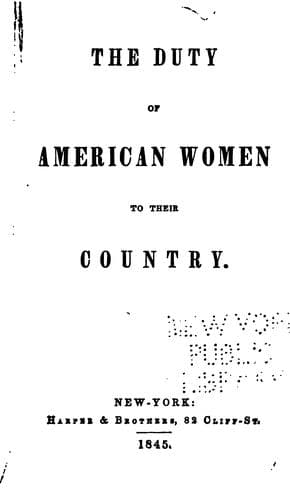
The Duty of American Women to Their CountryBeecher, Catharine Esther
History
The Duty of American Women to Their Country
Beecher, Catharine Esther
Education; Education -- United States; Women teachers -- United States
See that last and most innocent sufferer, the poor little Dauphin,
every tender feeling crushed, deliberately instructed in vice, doomed
to disgusting and degrading services, and, ere long, cruelly starved to
death!
American mother, wife, sister, daughter, the same earthquake is trembling
under your feet! If such an awful period agitates any portion of this
land, it will be those raised by wealth and station as the objects of
popular envy, who must first meet the storm. You sit now in peace and
plenty; you spend your time in elegant pleasures, and, while absorbed in
selfish enjoyment, you forget the young and destitute growing up around
you. And as you embroider the flower, and twine the silk, and fold the
riband, they are learning to sharpen the dagger, and twine the cord,
and plant the cannon. Within a stone’s throw of that smiling child with
golden locks, who now absorbs a mother’s thoughts, may be growing up, in
the darkness of ignorance and vice, the very hand that, at some awful
crisis, will grasp those locks in rage, and plant the dagger in that
happy bosom.
And when, in some after hour of terror and distress, when the roar of
musketry is heard, shooting down father and husband, and brother and
friend; when the bells are tolling, and the drums beating, and the wife,
mother, and daughter behold those they love best girding to meet the
violators of law; when they catch the parting expression of flushed
excitement, or stern determination, or serious foreboding, as the loved
one departs, perhaps to be returned a breathless corse--then, in the hour
of anxious solitude, will the solemn inquest be made for those ruffian
minds, ruined by neglect; and the voice of the Lord God will be heard,
walking in the trees of the garden, demanding, “Where is thy brother?”
And the trembling response, “Am I my brother’s keeper?” will meet the
stern rebuke, “What hast thou done? the voice of thy brother’s blood
crieth unto me from the ground.”
But why appeal to motives of fear and danger? Alas! those thousands and
millions of neglected little ones in our land, they know not their wants
or their danger, or they would raise their supplicating hands. Is there
anything more appropriate than that gentle woman should be invoked to
their aid? Is there anything more beautiful, more heavenly, than that
she should spend her time, and thoughts, and means to rescue them? What
is it that you would enjoy the most in after days, gazing at the fading
beauties you have wrought in canvass, muslin, or lace, or looking around
on the intelligent, useful, happy minds you have been instrumental in
training, and who will rise up and call you blessed? True, you cannot
gain this rich reward without some self-denying toil and persevering
effort. But is it not worth the labour?
Public-domain text, read in full here on John Shaqi.
Reviews
Reviews
No reviews yet
Be the first to share your thoughts on this work.
Join the Discussion
Join the discussion
Sign in to leave a comment or review.
Sign InorCreate an account