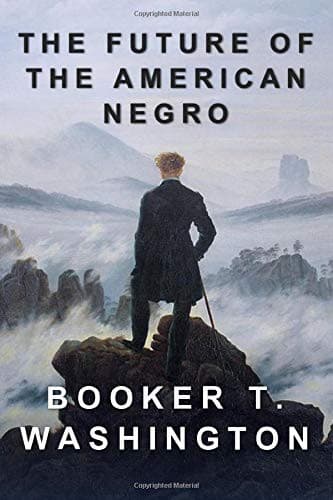
The Future of the American NegroWashington, Booker T.
History
The Future of the American Negro
Washington, Booker T.
African Americans
All this shows pretty conclusively that a return to Africa for the
Negro is out of the question, even provided that a majority of the
Negroes wished to go back, which they do not. The adjustment of the
relations of the two races must take place here; and it is taking
place slowly, but surely. As the Negro is educated to make homes and
to respect himself, the white man will in turn respect him.
It has been urged that the Negro has inherent in him certain traits of
character that will prevent his ever reaching the standard of
civilisation set by the whites, and taking his place among them as an
equal. It may be some time before the Negro race as a whole can stand
comparison with the white in all respects,--it would be most
remarkable, considering the past, if it were not so; but the idea that
his objectionable traits and weaknesses are fundamental, I think, is a
mistake. For, although there are elements of weakness about the Negro
race, there are also many evidences of strength.
It is an encouraging sign, however, when an individual grows to the
point where he can hold himself up for personal analysis and study. It
is equally encouraging for a race to be able to study itself,--to
measure its weakness and strength. It is not helpful to a race to be
continually praised and have its weakness overlooked, neither is it
the most helpful thing to have its faults alone continually dwelt
upon. What is needed is downright, straightforward honesty in both
directions; and this is not always to be obtained.
There is little question that one of the Negroes' weak points is
physical. Especially is this true regarding those who live in the
large cities, North and South. But in almost every case this physical
weakness can be traced to ignorant violation of the laws of health or
to vicious habits. The Negro, who during slavery lived on the large
plantations in the South, surrounded by restraints, at the close of
the war came to the cities, and in many cases found the freedom and
temptations of the city too much for him. The transition was too
sudden.
Public-domain text, read in full here on John Shaqi.
Reviews
Reviews
No reviews yet
Be the first to share your thoughts on this work.
Elsewhere in the archive
Join the Discussion
Join the discussion
Sign in to leave a comment or review.
Sign InorCreate an account