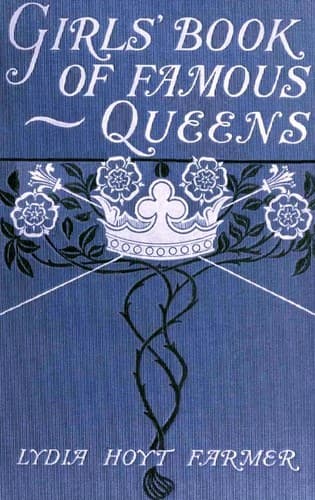
The Girls' Book of Famous QueensFarmer, Lydia Hoyt
History
The Girls' Book of Famous Queens
Farmer, Lydia Hoyt
Queens -- Biography -- Juvenile literature
Meanwhile, with a presentiment of her impending doom, she made special
studies of all sorts of poisons, to discern, if possible, which would
occasion the most speedy and painless death. She also experimented
regarding the effects of the bites of the most poisonous reptiles
and insects, using for her victims animals or condemned prisoners.
At length she discovered that the asp was the only one whose bite
occasioned neither torture nor convulsions, the victim being speedily
stupefied, and dying in a seemingly painless sleep.
Antony and Cleopatra now formed a new compact, called
“Synapothanumenon,” signifying the order and agreement of those who
will die together, in substitution for their former order of existence,
called “Amimetobion,” meaning “no life comparable.”
News at length reached Alexandria that Cæsar had appeared before
Pelusium, and that the city had fallen into his hands. It is said
that this capture was obtained through the treachery of Cleopatra,
who sent secret word to her governor there to surrender the place.
Then, to clear herself from the rumors of this treason, she put the
wife and children of the governor into Antony’s hands that he might
revenge himself by putting them to death. Thus had vice and ambition
robbed this Egyptian queen of all the charms of innocence and womanly
tenderness, until she had become almost fiend-like in her cruelty and
selfishness. Thus can the spirit of selfish ambition become a serpent
in the heart, poisoning all its nobler aspirations. The beautiful,
fascinating Cleopatra was fast becoming as great a monster of crime as
her atrocious ancestors.
Adjoining the temple of Isis, Cleopatra had caused a magnificent tomb
to be built for herself, and thither she ordered all her most precious
treasures to be brought. She there stored her gold, silver, jewels,
ebony, ivory, and a large quantity of costly perfumes and aromatic
woods. She also sent to this mausoleum an immense quantity of flax,
tow, torches, and other combustibles, which she ordered stored in the
lower apartments of the tomb, that they might be in readiness should
she determine to destroy herself and treasures by fire rather than
allow them to fall into the hands of her enemies.
Cæsar, hearing of these preparations made by the Egyptian queen,
was fearful lest she might escape him, with all her treasures, and
constantly sent her messages offering her promises of generous
treatment when he should reach Alexandria.
Public-domain text, read in full here on John Shaqi.
Reviews
Reviews
No reviews yet
Be the first to share your thoughts on this work.
Elsewhere in the archive
Join the Discussion
Join the discussion
Sign in to leave a comment or review.
Sign InorCreate an account