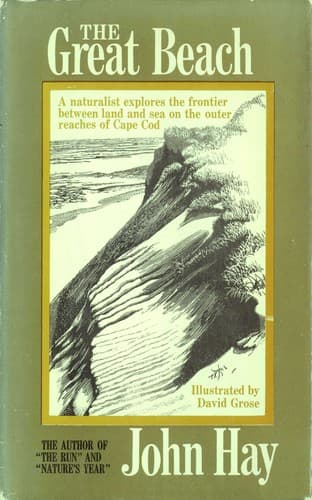
Cape Cod (Mass.) -- Description and travel; Natural history -- Massachusetts -- Cape Cod
Many thousands of eider ducks winter in Cape Cod waters. During
October and November especially they can be seen shuttling back and
forth across the sea beyond the Outer Beach. Some feed, principally
on mussels, in the bay region or off Chatham and along other shallow
shores and inlets, but the majority--an estimated 500,000--spend the
winter over the shoals between Monomoy and Nantucket. Seen close to,
as they fly low over the water, they are as sturdy, clean shaped, and
of good design--the red-brown females, and males patterned in black
and white--as a coastal vessel, a dory, or a skiff. From the beach you
can see them fly over water in single lines, sometimes as much as a
half a mile or more in length, with a steady, throbbing flight, like a
suspended string of beads, alternately white and brown.
By contrast brant fly in longer, thicker lines, and sometimes show up
like shivering black specks high over the sea. Well into December the
gannets pass by over the sea surfaces too, flying singly for the most
part, their broad white backs and long black-tipped wings reflecting
the sunlight as they turn, to dive in their grand manner down, from
fifty feet or more in the air, hard and bold into the water, sending up
jets of spray.
Clutching at any aspect of nature is to seize a drop of water in your
hand. Ebb and flow passes the great beach, the eternally wide ebb and
flow of day and night passes the cliff tops, all earth’s shadows wave
across its seas, and yet this is the precise route of the birds, their
direction and their home. They know its guidelines inwardly. For us,
who put so much emphasis on outward instruments, this can be almost
impossible to understand.
Still, we can exaggerate the division between us. We are all at home
together, however we use the stars and seasons in our separate ways.
Men are as subject to mortality as birds, even though the latter can’t
dwell upon it. They in turn are vulnerable to chance, to disease,
to going astray and meeting with mishaps when confronted by the
freakishness and violence of the weather. Many a duck or sea bird,
caught on a lee shore or in a marshy inlet during a great storm may
be unable to rise into the wind and is exhausted or swept away and
seriously injured while trying. Life and death, joy and disaster, go
wing to wing. Birds have less capacity to deceive themselves than we,
being unable to avoid the perils of nature and at the same time its
protective power.
Public-domain text, read in full here on John Shaqi.
Reviews
Reviews
No reviews yet
Be the first to share your thoughts on this work.
Elsewhere in the archive
Join the Discussion
Join the discussion
Sign in to leave a comment or review.
Sign InorCreate an account