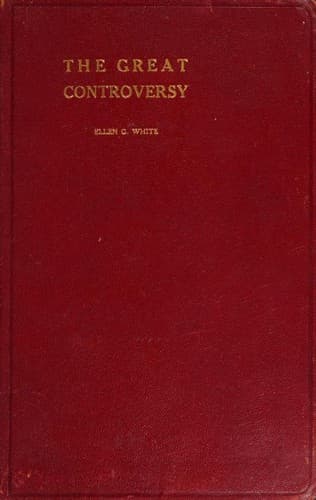
The Great Controversy Between Christ and SatanWhite, Ellen Gould Harmon
ReligionComparative
The Great Controversy Between Christ and Satan
White, Ellen Gould Harmon
Good and evil; Seventh-Day Adventists -- Doctrines; Spiritual direction
From Bohemia the light extended to Germany; for disturbances in the
University of Prague caused the withdrawal of hundreds of German students.
Many of them had received from Huss their first knowledge of the Bible,
and on their return they spread the gospel in their fatherland.
Tidings of the work at Prague were carried to Rome, and Huss was soon
summoned to appear before the pope. To obey would be to expose himself to
certain death. The king and queen of Bohemia, the university, members of
the nobility, and officers of the government, united in an appeal to the
pontiff that Huss be permitted to remain at Prague, and to answer at Rome
by deputy. Instead of granting this request, the pope proceeded to the
trial and condemnation of Huss, and then declared the city of Prague to be
under interdict.
In that age this sentence, whenever pronounced, created wide-spread alarm.
The ceremonies by which it was accompanied were well adapted to strike
terror to a people who looked upon the pope as the representative of God
Himself, holding the keys of heaven and hell, and possessing power to
invoke temporal as well as spiritual judgments. It was believed that the
gates of heaven were closed against the region smitten with interdict;
that until it should please the pope to remove the ban, the dead were shut
out from the abodes of bliss. In token of this terrible calamity, all the
services of religion were suspended. The churches were closed. Marriages
were solemnized in the churchyard. The dead, denied burial in consecrated
ground, were interred, without the rites of sepulture, in the ditches or
the fields. Thus by measures which appealed to the imagination, Rome
essayed to control the consciences of men.
The city of Prague was filled with tumult. A large class denounced Huss as
the cause of all their calamities, and demanded that he be given up to the
vengeance of Rome. To quiet the storm, the Reformer withdrew for a time to
his native village. Writing to the friends whom he had left at Prague, he
said: “If I have withdrawn from the midst of you, it is to follow the
precept and example of Jesus Christ, in order not to give room to the
ill-minded to draw on themselves eternal condemnation, and in order not to
be to the pious a cause of affliction and persecution, I have retired also
through an apprehension that impious priests might continue for a longer
time to prohibit the preaching of the word of God amongst you; but I have
not quitted you to deny the divine truth, for which, with God’s
assistance, I am willing to die.”(128) Huss did not cease his labors, but
traveled through the surrounding country, preaching to eager crowds. Thus
the measures to which the pope resorted to suppress the gospel, were
causing it to be the more widely extended. “We can do nothing against the
truth, but for the truth.”(129)
Public-domain text, read in full here on John Shaqi.
Reviews
Reviews
No reviews yet
Be the first to share your thoughts on this work.
Elsewhere in the archive
Join the Discussion
Join the discussion
Sign in to leave a comment or review.
Sign InorCreate an account