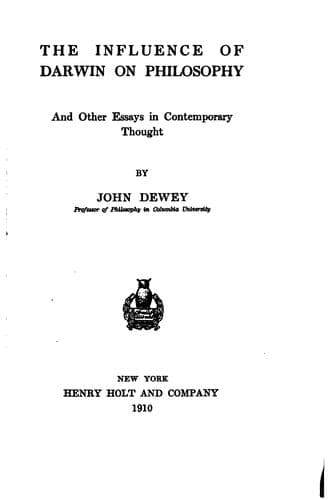
The Influence of Darwin on Philosophy, and other essays in contemporary thoughtDewey, John
Philosophy
The Influence of Darwin on Philosophy, and other essays in contemporary thought
Dewey, John
Evolution; Philosophy; Pragmatism
Knowledge of the process and conditions of physical and social
change through experimental science and genetic history has one
result with a double name: increase of control, and increase of
responsibility; increase of power to direct natural change, and
increase of responsibility for its equitable direction toward fuller
good. Theory located within progressive practice instead of reigning
statically supreme over it, means practice itself made responsible
to intelligence; to intelligence which relentlessly scrutinizes the
consequences of every practice, and which exacts liability by an
equally relentless publicity. As long as morals occupies itself with
mere ideals, forces and conditions as they are will be good enough for
“practical” men, since they are then left free to their own devices
in turning these to their own account. As long as moralists plume
themselves upon possession of the domain of the categorical imperative
with its bare precepts, men of executive habits will always be at
their elbows to regulate the concrete social conditions through which
the form of law gets its actual filling of specific injunctions. When
freedom is conceived to be transcendental, the coercive restraint of
immediate necessity will lay its harsh hand upon the mass of men.
In the end, men do what they can do. They refrain from doing what they
cannot do. They do what their own specific powers in conjunction with
the limitations and resources of the environment permit. The effective
control of their powers is not through precepts, but through the
regulation of their conditions. If this regulation is to be not merely
physical or coercive, but moral, it must consist of the intelligent
selection and determination of the environments in which we act; and
in an intelligent exaction of responsibility for the use of men’s
powers. Theorists inquire after the “motive” to morality, to virtue and
the good, under such circumstances. What then, one wonders, is their
conception of the make-up of human nature and of its relation to virtue
and to goodness? The pessimism that dictates such a question, if it be
justified, precludes any consideration of morals.
Public-domain text, read in full here on John Shaqi.
Reviews
Reviews
No reviews yet
Be the first to share your thoughts on this work.
Join the Discussion
Join the discussion
Sign in to leave a comment or review.
Sign InorCreate an account