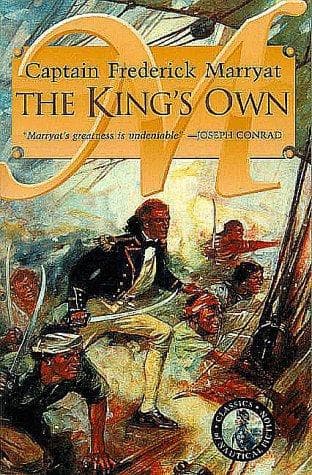
Great Britain -- History, Naval -- 18th century -- Fiction; Nore Mutiny, 1797 -- Fiction
"Is it not shocking," continued McElvina, "to reflect upon the conduct
of the magistrate, who has just sentenced perhaps four or five unhappy
wretches to a dungeon for an offence against these laws? He leaves the
seat of Justice, and returns to the bosom of his family. Here his
wife," (mimicking)--"`Well, my dear, you're come at last--dinner has
been put back this half-hour. I thought you would never have finished
with those odious smugglers.' `Why, my love, it was a very difficult
case to prove; but we managed it at last, and I have signed the warrant
for their committal to the county gaol. They're sad, troublesome
fellows, these smugglers.'--Now look at the lady: `What dress is that
you put on to greet your husband?' `Gros de Naples de Lyon.'--`The lace
it is trimmed with?' `Valenciennes,'--`Your gloves, madam?' `Fabrique
de Paris.'--`Your ribands, your shoes, your handkerchief?' All, all
contraband.--Worthy magistrate, if you would hold the scales of Justice
with an even hand, make out _one more_ mittimus before you sit down to
table. Send your wife to languish a twelvemonth in company with the
poor smugglers, and then `to dinner with what appetite you may.' And
now, Debriseau, have I convinced you that I may follow my present
calling, and still say--`_be honest_?'"
"Why, yes, I think we both may; but would not this evil be removed by
free trade?"
"Heaven forbid!" replied McElvina, laughing; "then there would be no
_smuggling_."
CHAPTER TWELVE.
Love me, love my dog.
PROVERB.
It is the misfortune of those who have been in constant habits of deceit
that they always imagine others are attempting the same dishonest
practices. For some time McElvina felt convinced that our little hero
had swerved from truth in the account which he gave of himself; and it
was not until after repeated catechisings, in which he found that,
strange and improbable as the narrative appeared, Willy never altered
from or contradicted his original statement, that he believed the boy to
be as honest and ingenuous as might have been inferred from his
prepossessing countenance.
To this conviction, how ever, did he arrive at last; and our hero--who
seemed no sooner to have lost one protector than to have the good
fortune to find another--became the favourite and companion of his new
captain, instead of his domestic, as had been originally contemplated.
A lad of Willy's age, who is treated with kindness and consideration, is
soon attached, and becomes reconciled to any change of circumstances.
It was a matter of indifference to our hero whether he was on the
quarter-deck of a man-of-war or in the cabin of a smuggling sloop.
Contented with his present lot,--with the happy thoughtlessness of
youth, he never permitted the future to disturb his repose or affect his
digestion.
Public-domain text, read in full here on John Shaqi.
Reviews
Reviews
No reviews yet
Be the first to share your thoughts on this work.
Join the Discussion
Join the discussion
Sign in to leave a comment or review.
Sign InorCreate an account