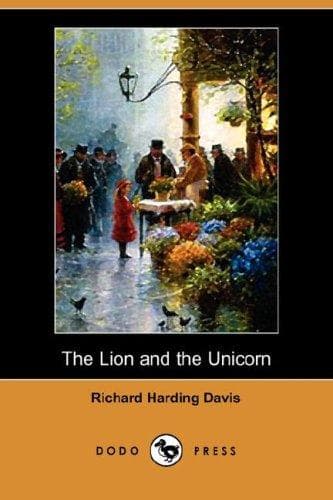
Manners and customs -- Fiction; Short stories, American
He knew, as he sat each evening on his veranda, looking across the
bay, that in the world beyond the pink and gold sunset men were still
panting, struggling, and starving; crises were rising and passing;
strikes and panics, wars and the rumors of wars, swept from continent to
continent; a plague crept through India; a filibuster with five hundred
men at his back crossed an imaginary line and stirred the world from
Cape Town to London; Emperors were crowned; the good Queen celebrated
the longest reign; and a captain of artillery imprisoned in a swampy
island in the South Atlantic caused two hemispheres to clamor for
his rescue, and lit a race war that stretched from Algiers to the
boulevards.
And yet, at the Windless Isles, all these happenings seemed to Sir
Charles like the morning’s memory of a dream. For these things never
crossed the ring of the coral reefs; he saw them only as pictures in an
illustrated paper a month old. And he was pleased to find that this
was so. He was sufficient to himself, with his own responsibilities and
social duties and public works.
He was a man in authority, who said to others, “Come!” and “Go!” Under
him were commissioners, and under the commissioners district inspectors
and boards of education and of highways. For the better health of the
colony he had planted trees that sucked the malaria from the air;
for its better morals he had substituted as a Sunday amusement
cricket-matches for cock-fights; and to keep it at peace he had created
a local constabulary of native negroes, and had dressed them in the
cast-off uniforms of London policemen. His handiwork was everywhere,
and his interest was all sunk in his handiwork. The days passed gorgeous
with sunshine, the nights breathed with beauty. It was an existence
of leisurely occupation, and one that promised no change, and he was
content.
As it was Thursday, the Council met that morning, and some questions
of moment to the colony were to be brought up for consideration.
The question of the dog-tax was one which perplexed Sir Charles most
particularly. The two Councillors elected by the people and the three
appointed by the crown had disagreed as to this tax. Of the five hundred
British subjects at the seaport, all but ten were owners of dogs, and it
had occurred to Sassoon, the chemist, that a tax of half-a-crown a
year on each of these dogs would meet the expense of extending the
oyster-shell road to the new cricket-grounds. To this Snellgrove, who
held the contract for the narrow-gauge railroad, agreed; but the three
crown Councillors opposed the tax vigorously, on the ground that as
scavengers alone the dogs were a boon to the colony and should be
encouraged. The fact that each of these gentlemen owned not only one,
but several dogs of high pedigree made their position one of great
delicacy.
Public-domain text, read in full here on John Shaqi.
Reviews
Reviews
No reviews yet
Be the first to share your thoughts on this work.
Join the Discussion
Join the discussion
Sign in to leave a comment or review.
Sign InorCreate an account