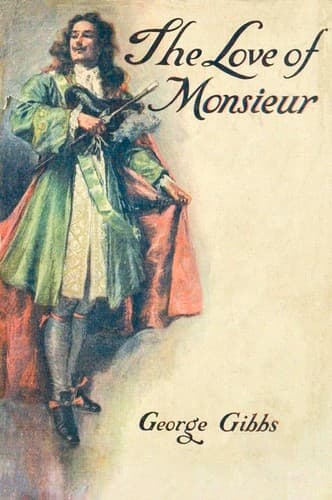
Adventure stories; French -- England -- Fiction; Great Britain -- History -- Charles II, 1660-1685 -- Fiction; Love stories
which men rise or sink to their own level, had achieved a position
in which he consorted with kings, dukes, and princes of the realm,
and boasted of a king for an intimate. In a moment he had rendered at
naught the struggles of years--had tossed aside, as one would discard a
worn-out hat or glove, all chances of future preferment in France and
England--all for a foolish whim, for a pair of silly gray eyes. She hid
her face in her arms. Fools! all fools!
She hated herself that she did not hate Monsieur Mornay. Struggle as
she would, now that he was gone she knew that the impulsive words
that she had used when she had spurned him had sprung from no origin
of thought or reflection, but were the rebellious utterings of anger
at his intrusion--of resentment and uncharity at the tale he told.
But what if it were true? She sat upright, and with a struggle tried
dispassionately and calmly to go over, one by one, each word of his
speech, each incident of his bearing, as he told his portentous story
of the secrets of her family. How had Monsieur Mornay come into
possession of all this information? She knew that Eloise de Bresac
had died in France and that the Duke of Nemours had sent the body
to be buried on the estates in Normandy, where it lay in the family
tomb. She knew that Sir Henry Heywood’s intimacy with the Duke was of
long standing, and that there was a mystery in regard to the death of
this daughter of the house which had never been explained to her. Her
grandfather had been ill at the time, she remembered, and had died
before Sir Henry Heywood and her father--who had gone to France--had
returned. The story of the Frenchman tallied strangely with the facts
as she knew them. How did Mornay know of the unfortunate woman’s death
at Amiens? Was the story of the Spaniard D’Añasco invented to comport
with the family’s traditionary hatred of the Spanish? Were the names
_Castillano_, of the ship, and Ruiz, of the boy, mere fabrications,
to achieve an end? How did he know these things? The family history
of the Bresacs was not an open book to all the world. No one but Sir
Henry Heywood and herself had known of the visits to Paris and the
death-place of Eloise.
Public-domain text, read in full here on John Shaqi.
Reviews
Reviews
No reviews yet
Be the first to share your thoughts on this work.
Join the Discussion
Join the discussion
Sign in to leave a comment or review.
Sign InorCreate an account