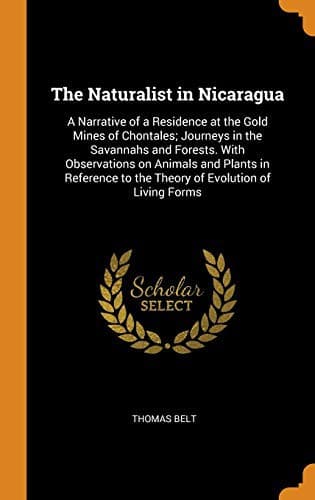
Natural history -- Nicaragua; Nicaragua -- Description and travel
Like most of the Nicaraguan towns, Acoyapo appears to have been an
Indian city before the Spanish conquest. The name is Indian, and in
the plaza Senor Bermudez pointed out to me some flat bared rock
surfaces, on which were engraved circles and various straight and
curved characters, covering the whole face of the rock. Some rude
portions of stone statues that have been found in the neighbourhood
are also preserved in the town. The Spaniards called the town San
Sebastian; but the more ancient name is likely to prevail,
notwithstanding that in all official documents the Spanish one is
used. Acoyapo is a grazing district, and there are some large
cattle haciendas, especially towards the lake. The town suffers
from fever owing to the neighbouring swamp. Much of the land around
is very fertile; but little of it is cultivated, as the people are
indolent, and content if they make a bare livelihood. We left
Acoyapo about three o'clock: our road lay up the river, which we
crossed three times. Excepting near the river, the country was very
thinly timbered; and it was pleasant, after riding across the open
plains, exposed to the hot rays of the sun, to reach the shady
banks of the stream, by which grew many high thick-foliaged trees,
with lianas hanging from them, and bromelias, orchids, ferns, and
many other epiphytes perched on their branches. At these spots,
too, were various beautiful birds, amongst which the Sisitote, a
fine black and orange songster, and a trogon (Trogon
malanocephalus, Gould), were the most conspicuous.
Public-domain text, read in full here on John Shaqi.
Reviews
Reviews
No reviews yet
Be the first to share your thoughts on this work.
Elsewhere in the archive
Join the Discussion
Join the discussion
Sign in to leave a comment or review.
Sign InorCreate an account