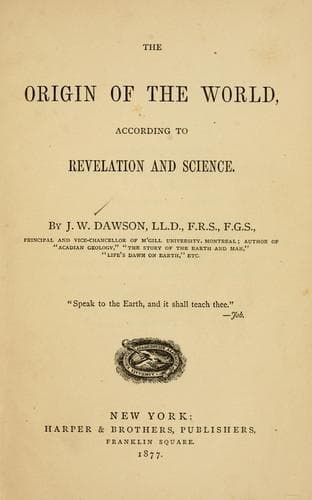
The Origin of the World According to Revelation and ScienceDawson, John William, Sir
Religion
The Origin of the World According to Revelation and Science
Dawson, John William, Sir
Bible and science; Religion and science
3. The Bible recognizes purpose, use, and special adaptation in
nature. It is, in short, full of natural theology, akin in some
respects to that which has been so elaborately worked out by so many
modern writers. Numerous passages in support of this will occur to
every one who has read the Scriptures. It is necessary here, however,
to direct attention to a distinction very obvious in Scripture, but
not always attended to by writers on this subject. The Bible maintains
the true "final cause" of all nature to be, not its material and
special adaptations or its value to man, but the pleasure or
satisfaction of the Creator himself. In the earlier periods of
Creation, before man was upon the earth, God contemplates his work and
pronounces it good. The heavenly hosts praise him, saying, "Thou hast
created all things, and for thy pleasure they are and were created."
Further, the Bible represents intelligences higher than man as sharing
in the delight which may be derived from the contemplation of God's
works. When the earth first rose from the waters to greet the light,
"the morning stars sang together, and all the sons of God shouted for
joy." There are many things in nature that strongly impress the
naturalist with this same view, that the Creator takes pleasure in his
works; and, like human genius in its highest efforts, rejoices in
production, even if no sentient being should be ready to sympathize.
The elaborate structures of fossils, of which we have only fragmentary
remains, the profusion of natural objects of surpassing beauty that
grow and perish unseen by us, the delicate microscopic mechanism of
nearly all organic structures, point to other reasons for beauty and
order than those that concern man, or the mere utilities of human
beings; and though there are now naturalists who deny absolutely that
beauty is an object in nature, and assign even the colors of flowers
and insects to utility alone, and this of a very low order, this
doctrine is so repulsive to our higher sentiments that there is
little danger of its general acceptance; while the slightest
consideration shows that the utilities referred to could have been
secured without any of this consummate beauty associated with them,
and our perception of and delight in which mark in a way beyond the
ability of skepticism to cavil at our own spiritual kinship with the
Author of all this profusion of beauty. Yet man is represented as the
chief created being for whom this earth has been prepared and
designed. He obtains dominion over it. A chosen spot is prepared for
him, in which not only his wants but his tastes are consulted; and,
being made in the image of his Maker, his aesthetic sentiments
correspond with the beauties of the Maker's work, and he finds there
also food for his reason and imagination. This view of the subject, as
well as others already referred to, is finely represented in the
address of the Almighty to Job.[26]
Public-domain text, read in full here on John Shaqi.
Reviews
Reviews
No reviews yet
Be the first to share your thoughts on this work.
Elsewhere in the archive
Join the Discussion
Join the discussion
Sign in to leave a comment or review.
Sign InorCreate an account