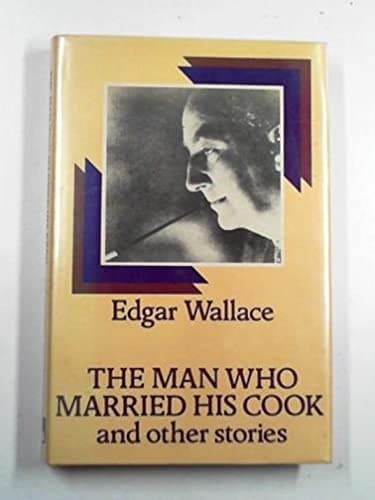
Detective and mystery stories; English fiction -- 20th century
If you see, on one hand, ice forming on a pool, and, on the other, a
thermometer rising slowly to blood-heat, you may be satisfied in your
mind that something is wrong somewhere. Nature cannot make mistakes.
Thermometers are equally infallible. Look for the human agency at
work on the mercury bulb for the jet of hot air directed to the
instrument. In this parable is explained the market position, and T.
B. Smith, who dealt with huge, vague problems like markets and wars
and national prosperity, was looking for the hot-air current.
The market rises because big people buy big quantities of shares; it
falls because these same people sell, and T. B. Smith happened to
know that nobody was buying. That is, nobody of account--Eckhardts,
Tollingtons, or Bronte's Bank. You can account for the rise of a
particular share by some local and favourable circumstance, but when
the market as a whole moves up----?
"We can trace no transactions," wrote Mr. Louis Vell, of the firm of
Vell, Vallings & Boys, Brokers, "carried out by or on behalf of the
leading jobbers. The market improvement in Industrial Stocks is due,
as far as we can gather, to Continental buying--an unusual
circumstance."
Who was the "philanthropist" who was making a market in stagnant
stocks? Whoever it was, he or they repented long before T. B. Smith
had reached the Central Criminal Court, which was his objective.
He was a witness in the Gildie Bank fraud case, and his
cross-examination at the hands of one of the most relentless of
counsel occupied three hours. This concluded to everybody's
satisfaction, save counsel's, T. B. Smith, who hated the law courts,
walked out into Old Bailey to find newsboys loudly proclaiming,
"Slump on the Stock Exchange!"
"Thank Heaven, that bubble's burst!" said T. B. piously, and walked
back to Scotland Yard, whistling.
He did not doubt that the artificial rise had failed, and that the
market had gone back to normal.
At the corner of the Thames Embankment he bought a paper, and the
first item of news he read was:
"Consols have fallen to 84."
Now, Consols that morning had stood at 90, and T. B. Smith stopped
whistling.
CHAPTER X
THE ANTICIPATORS
T. B. Smith strolled into the room of Superintendent Elk.
Elk is a detective officer chiefly remarkable for his memory. A
tall, thin, sad man, who affects a low turned-down collar and the
merest wisp of a black tie. If he has any other pose than his desire
to be taken for a lay preacher, it is his pose of ignorance on most
subjects. Elk's attitude to the world at large is comprehended in
the phrase, "I am a child in these things," which accounts to a very
great extent for the rapidity of his promotion in the Criminal
Investigation Department.
T. B.'s face wore a frown, and he twirled a paper-knife irritably.
"Elk," he said, without any preliminary, "the market has gone to the
devil."
"Again?" said Elk politely, having knowledge without interest.
Public-domain text, read in full here on John Shaqi.
Reviews
Reviews
No reviews yet
Be the first to share your thoughts on this work.
Join the Discussion
Join the discussion
Sign in to leave a comment or review.
Sign InorCreate an account