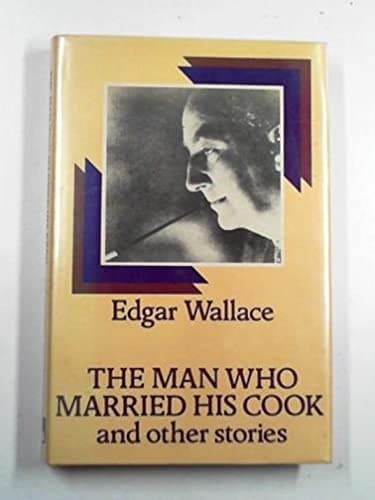
Detective and mystery stories; English fiction -- 20th century
The bank was closed, but there was a side door--if, indeed, such an
insignificant title could be applied to the magnificent portal of
mahogany and brass--and a bell, which was answered by a uniformed
porter.
"The bank is closed, gentlemen," he said when T. B. had stated his
errand.
"My business is very urgent," said T. B. imperatively, and the man
hesitated.
"I am afraid Sir George has left the building," he said, "but, if you
will give me your cards, I will see."
T. B. Smith drew a card from his case. He also produced a tiny
envelope, in which he inserted the card.
A few minutes later the messenger returned.
"Sir George will see you," he said, and ushered them into an
anteroom. "Just a moment, gentlemen; Sir George is engaged."
Ten minutes passed before he came again. Then he reappeared, and
they followed him along a marble-tiled corridor to the sanctum of the
great man.
It was a large room, solidly and comfortably furnished and thickly
carpeted. The only ornamentation was the beautifully carved mantel,
over which hung the portrait of Septimus Bronte, who, in 1743, had
founded the institution which bore his name.
Sir George Calliper rose to meet them.
He was a tall young man with sandy hair and a high, bald forehead.
From his square-toed boots to his black satin cravat, he was
commercial solidity personified. T. B. noted the black ribbon
watchguard, the heavy dull gold signet-ring, the immaculately
manicured nails, the dangling black-rimmed monocle, and catalogued
his observations for future reference.
Van Ingen, who saw with another eye and from a different point of
view, mentally recorded a rosebud on the carpet and a handkerchief.
"Now, what can I do for you?" asked Sir George; he picked up the card
from the desk and refreshed his memory.
"We're very sorry to trouble you," began T. B. conventionally, but
the baronet waved the apology aside.
"I gather you have not come to see me out of office hours without
cause," he said, and his tone rather suggested that it would be
unpleasant even for an Assistant-Commissioner, if he had.
"No, but I've come to make myself a nuisance--I want to ask you
questions," said T. B. coolly.
"So long as they are pertinent to the business in hand, I shall have
every pleasure in answering," replied Sir George.
"First and foremost, is there the slightest danger of Bronte's Bank
failing?" asked T. B. Smith calmly.
The audacity of the question struck the baronet dumb.
"Failing?" he repeated. "Bronte's fail--Mr. Smith, are you jesting?"
"I was never more in earnest," said T. B. "Think what you like of my
impertinence, but humour me, please."
The banker looked hard at the man before him, as though to detect
some evidence of ill-timed humour.
"It is no more possible for Bronte's to fail than the Bank of
England," he said brusquely.
Public-domain text, read in full here on John Shaqi.
Reviews
Reviews
No reviews yet
Be the first to share your thoughts on this work.
Elsewhere in the archive
Join the Discussion
Join the discussion
Sign in to leave a comment or review.
Sign InorCreate an account