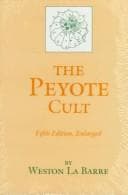
Indians of North America -- Religion; Indians of North America -- Rites and ceremonies; Peyotism
State laws against peyote have been more successful. The Oklahoma law of
March 11, 1899 was automatically repealed by omission in the codification
of the state laws; the Darnell bill of 1927 was defeated April 13, 1927.
The following states have anti-peyote laws: Colorado (before 1923),
Idaho, Iowa, Kansas, Montana (by 1925), Nebraska, Nevada (by 1918), New
Mexico, North Dakota (before 1923), South Dakota, Utah (before 1918), and
Wyoming (1929). The Native American Church is incorporated in Oklahoma
and Montana, however, under state charters.
[27] The trip is made after the rainy season and the corn harvest
(Lumholtz, _Unknown Mexico_, 2:127); the roasting of corn is of equal
ritual importance with the hikuli-harvest and the deer-hunt: the three,
indeed, deer, corn and peyote are symbolically the same (Lumholtz _op.
cit._, 2:156, 279).
[28] Lumholtz, _Unknown Mexico_, 2:82, 126-27, 141, 157, 271, 272;
_Handbook of the American Indians_, 1:576-77; Klineberg, _Notes on the
Huichol_, 449. For the gourd-symbolism see also Lumholtz, _op. cit_.,
2:57-58, 129, 220; for the arrows, _Handbook of the American Indians_,
2:663.
[29] Cf. the universal corn shuck cigarette of Plains peyotism (a
region of deep-rooted pipe ceremonialism), a remarkable case of
culture-continuity.
[30] Lumholtz, _Unknown Mexico_, 2:129-35.
[31] Lumholtz, _The Huichol_, 8; _Unknown Mexico_, 2:129-32, 141, 277-78;
for the use of the water see 2:57-58, 220.
[32] Cf. the Plains mode of preparing the meat, though the memory of the
meaning of this feature (like the corn shuck cigarette and ritual parched
corn) is long since gone.
[33] Lumholtz, _Unknown Mexico_, 2:132-35, 153, 156, 189, 271. The triple
corn-deer-peyote symbolism is completed when the women grind peyote on a
metate.
[34] Lumholtz, _Unknown Mexico_, 2:54, 272, 273-74. Cf. the Plains
“fire-stick” and fire-arrangement.
[35] Lumholtz, _Unknown Mexico_, 2:29-31, 142-44, 149-50.
[36] Spanish friars came in after 1722, but Huichol peyotism is almost
wholly free of Christian beliefs (_Handbook of the American Indians_,
1:576-77). Even the “baptism” rite is probably native.
[37] Klineberg (_Notes on the Huichol_, 449) mentions special dances led
by “angels” the next day—a boy and a girl dressed in their finest. It is
not clear if this refers to the dance leaders or to the ceremonial “race
for life” with the eating of cake-animals and spraying of the runners
by the elders. But elsewhere Lumholtz describes a dance with carved
bamboo serpent-sticks, deer-tails on short sticks, and whiskbroom “combs”
(_Unknown Mexico_ 2:49-50).
[38] Lumholtz, _Unknown Mexico_, 2:272, 274-75.
[39] But the whole peyote ritual might be divided into (1) the trip
for hikuli, (2) the deer hunt, and (3) the roasting of corn, though
peyote-deer-corn are symbolically identical.
[40] Lumholtz, _Unknown Mexico_, 2:279. Tamaulipecan peyotism is
similarly a hunting and first-fruits ceremony.
Public-domain text, read in full here on John Shaqi.
Reviews
Reviews
No reviews yet
Be the first to share your thoughts on this work.
Elsewhere in the archive
Join the Discussion
Join the discussion
Sign in to leave a comment or review.
Sign InorCreate an account