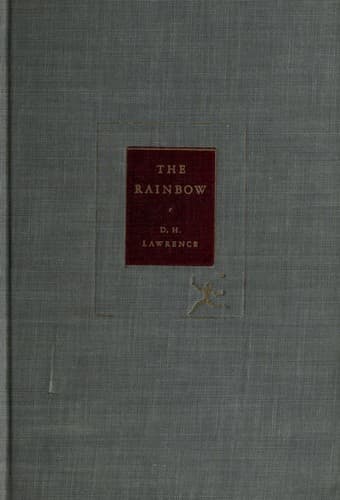
Domestic fiction; Family -- England -- Midlands -- Fiction; Midlands (England) -- Fiction
At first she would only glower or hiss at these strange men with their
uncouth accent. But they were good-humoured. She was a little oddity,
with her fierce, fair hair like spun glass sticking out in a flamy halo
round the apple-blossom face and the black eyes, and the men liked an
oddity. She kindled their attention.
She was very angry because Marriott, a gentleman-farmer from Ambergate,
called her the little pole-cat.
“Why, you’re a pole-cat,” he said to her.
“I’m not,” she flashed.
“You are. That’s just how a pole-cat goes.”
She thought about it.
“Well, you’re—you’re——” she began.
“I’m what?”
She looked him up and down.
“You’re a bow-leg man.”
Which he was. There was a roar of laughter. They loved her that she was
indomitable.
“Ah,” said Marriott. “Only a pole-cat says that.”
“Well, I am a pole-cat,” she flamed.
There was another roar of laughter from the men.
They loved to tease her.
“Well, me little maid,” Braithwaite would say to her, “an’ how’s th’
lamb’s wool?”
He gave a tug at a glistening, pale piece of her hair.
“It’s not lamb’s wool,” said Anna, indignantly putting back her
offended lock.
“Why, what’st ca’ it then?”
“It’s hair.”
“Hair! Wheriver dun they rear that sort?”
“Wheriver dun they?” she asked, in dialect, her curiosity overcoming
her.
Instead of answering he shouted with joy. It was the triumph, to make
her speak dialect.
She had one enemy, the man they called Nut-Nat, or Nat-Nut, a cretin,
with inturned feet, who came flap-lapping along, shoulder jerking up at
every step. This poor creature sold nuts in the public-houses where he
was known. He had no roof to his mouth, and the men used to mock his
speech.
The first time he came into the “George” when Anna was there, she
asked, after he had gone, her eyes very round:
“Why does he do that when he walks?”
“’E canna ’elp ’isself, Duckie, it’s th’ make o’ th’ fellow.”
She thought about it, then she laughed nervously. And then she
bethought herself, her cheeks flushed, and she cried:
“He’s a _horrid_ man.”
“Nay, he’s non horrid; he canna help it if he wor struck that road.”
But when poor Nat came wambling in again, she slid away. And she would
not eat his nuts, if the men bought them for her. And when the farmers
gambled at dominoes for them, she was angry.
“They are dirty-man’s nuts,” she cried.
So a revulsion started against Nat, who had not long after to go to the
workhouse.
There grew in Brangwen’s heart now a secret desire to make her a lady.
His brother Alfred, in Nottingham, had caused a great scandal by
becoming the lover of an educated woman, a lady, widow of a doctor.
Very often, Alfred Brangwen went down as a friend to her cottage, which
was in Derbyshire, leaving his wife and family for a day or two, then
returning to them. And no one dared gainsay him, for he was a
strong-willed, direct man, and he said he was a friend of this widow.
One day Brangwen met his brother on the station.
Public-domain text, read in full here on John Shaqi.
Reviews
Reviews
No reviews yet
Be the first to share your thoughts on this work.
Join the Discussion
Join the discussion
Sign in to leave a comment or review.
Sign InorCreate an account