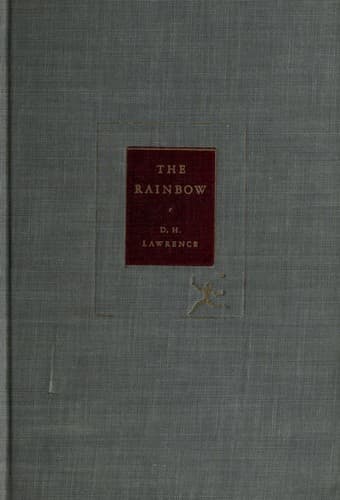
Domestic fiction; Family -- England -- Midlands -- Fiction; Midlands (England) -- Fiction
And at this period she was absorbed in becoming a young lady. She was
intelligent enough, but not interested in learning. At first, she
thought all the girls at school very ladylike and wonderful, and she
wanted to be like them. She came to a speedy disillusion: they galled
and maddened her, they were petty and mean. After the loose, generous
atmosphere of her home, where little things did not count, she was
always uneasy in the world, that would snap and bite at every trifle.
A quick change came over her. She mistrusted herself, she mistrusted
the outer world. She did not want to go on, she did not want to go out
into it, she wanted to go no further.
“What do _I_ care about that lot of girls?” she would say to her
father, contemptuously; “they are nobody.”
The trouble was that the girls would not accept Anna at her measure.
They would have her according to themselves or not at all. So she was
confused, seduced, she became as they were for a time, and then, in
revulsion, she hated them furiously.
“Why don’t you ask some of your girls here?” her father would say.
“They’re not coming here,” she cried.
“And why not?”
“They’re bagatelle,” she said, using one of her mother’s rare phrases.
“Bagatelles or billiards, it makes no matter, they’re nice young lasses
enough.”
But Anna was not to be won over. She had a curious shrinking from
commonplace people, and particularly from the young lady of her day.
She would not go into company because of the ill-at-ease feeling other
people brought upon her. And she never could decide whether it were her
fault or theirs. She half respected these other people, and continuous
disillusion maddened her. She wanted to respect them. Still she thought
the people she did not know were wonderful. Those she knew seemed
always to be limiting her, tying her up in little falsities that
irritated her beyond bearing. She would rather stay at home and avoid
the rest of the world, leaving it illusory.
For at the Marsh life had indeed a certain freedom and largeness. There
was no fret about money, no mean little precedence, nor care for what
other people thought, because neither Mrs. Brangwen nor Brangwen could
be sensible of any judgment passed on them from outside. Their lives
were too separate.
So Anna was only easy at home, where the common sense and the supreme
relation between her parents produced a freer standard of being than
she could find outside. Where, outside the Marsh, could she find the
tolerant dignity she had been brought up in? Her parents stood
undiminished and unaware of criticism. The people she met outside
seemed to begrudge her her very existence. They seemed to want to
belittle her also. She was exceedingly reluctant to go amongst them.
She depended upon her mother and her father. And yet she wanted to go
out.
Public-domain text, read in full here on John Shaqi.
Reviews
Reviews
No reviews yet
Be the first to share your thoughts on this work.
Elsewhere in the archive
Join the Discussion
Join the discussion
Sign in to leave a comment or review.
Sign InorCreate an account