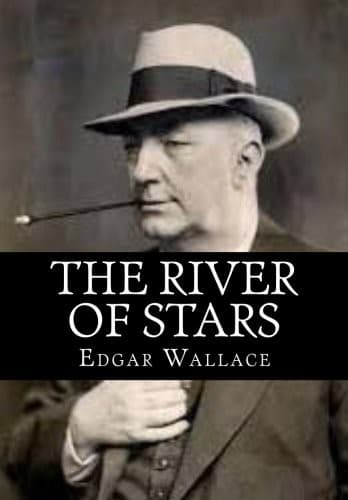
Africa, West -- Fiction; British -- Africa -- Fiction
Sutton’s ridiculous scruples stood between them and fortunes; this
crank by his obstinacy prevented their reaping the reward of their
industry. At the end of a week--a week unrelieved by the appearance of
a danger which might have shaken them to a clarity of thought--Sutton
was outcast. Worse than that, for him, he developed a malignant form of
malaria, and the party came to a halt in a big clearing of the forest.
Here, near a dried watercourse, they pitched their little camp, being
induced to the choice by the fact that water was procurable a few feet
below the surface.
Lambaire and Whitey went for a walk in the forest. Neither of them
spoke, they each knew the mind of the other.
“Well?” said Whitey at last.
Lambaire avoided his eye.
“It means ruin for us--and there’s safety and a fortune if he’d be
sensible.”
Again a long silence.
“Is he bad?” asked Lambaire suddenly, and the other shrugged his
shoulders.
“No worse than I’ve been half a dozen times. It’s his first attack of
fever.”
There was another long pause, broken by Whitey.
“We can’t carry him--we’ve got two carriers, and there’s another fifty
miles to go before we reach a mission station--so the carriers say.”
They walked aimlessly up and down, each man intent on his own thoughts.
They spoke no more, but returned to their little camp, where a
semi-delirious youth moaned and fretted querulously, talking in the
main to himself.
Lambaire stood by him, looking down at the restless figure; then he
went in search of Whitey.
“This thing has got to be done regularly,” he said, and produced a
note-book. “I trust you, Whitey, and you trust me--but we will have it
down in black and white.”
The two memorandums were drawn up in identical terms. Whitey demurred,
but signed....
Before the accustomed hour, Whitey woke the coast boy who acted as
interpreter and was one of the two remaining carriers.
“Get up,” he said gruffly; “get them guns on your head and move
quickly.”
The native rose sleepily. The fire was nearly out, and he gave it a
kick with his bare foot to rouse it to flame.
“None of that,” fumed Whitey--he was in an unusual mood. “Get the other
man, and trek.”
The little party went silently along the dark forest path, the native
leading the way with a lantern as protection against possible attacks
from wild beasts.
He stopped of a sudden and turned to Lambaire, who shuffled along in
his rear.
“Dem young massa, I no lookum.”
“Go on,” said Whitey gruffly. “Dem massa he die one time.”
The native grunted and continued his way. Death in this land, where men
rise up hale in the morning and are buried in sunset, was not a great
matter.
They halted at daybreak to eat the meal which was usually partaken of
before marching.
The two white men ate in silence--neither looking at the other.
Not until the forest was flooded with the rising sunlight did Whitey
make any reference to the events of the night.
Public-domain text, read in full here on John Shaqi.
Reviews
Reviews
No reviews yet
Be the first to share your thoughts on this work.
Join the Discussion
Join the discussion
Sign in to leave a comment or review.
Sign InorCreate an account