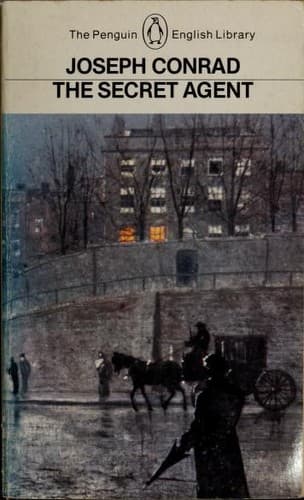
Anarchists -- Fiction; Bombings -- Fiction; Conspiracies -- Fiction; London (England) -- Fiction; Political fiction
The Chief Inspector thought it more than probable. In his opinion, the
two men had parted from each other within a hundred yards from the
Observatory walls. He explained also how the other man could have got
out of the park speedily without being observed. The fog, though not
very dense, was in his favour. He seemed to have escorted the other to
the spot, and then to have left him there to do the job single-handed.
Taking the time those two were seen coming out of Maze Hill Station by
the old woman, and the time when the explosion was heard, the Chief
Inspector thought that the other man might have been actually at the
Greenwich Park Station, ready to catch the next train up, at the moment
his comrade was destroying himself so thoroughly.
“Very thoroughly—eh?” murmured the Assistant Commissioner from under the
shadow of his hand.
The Chief Inspector in a few vigorous words described the aspect of the
remains. “The coroner’s jury will have a treat,” he added grimly.
The Assistant Commissioner uncovered his eyes.
“We shall have nothing to tell them,” he remarked languidly.
He looked up, and for a time watched the markedly non-committal attitude
of his Chief Inspector. His nature was one that is not easily accessible
to illusions. He knew that a department is at the mercy of its
subordinate officers, who have their own conceptions of loyalty. His
career had begun in a tropical colony. He had liked his work there. It
was police work. He had been very successful in tracking and breaking up
certain nefarious secret societies amongst the natives. Then he took his
long leave, and got married rather impulsively. It was a good match from
a worldly point of view, but his wife formed an unfavourable opinion of
the colonial climate on hearsay evidence. On the other hand, she had
influential connections. It was an excellent match. But he did not like
the work he had to do now. He felt himself dependent on too many
subordinates and too many masters. The near presence of that strange
emotional phenomenon called public opinion weighed upon his spirits, and
alarmed him by its irrational nature. No doubt that from ignorance he
exaggerated to himself its power for good and evil—especially for evil;
and the rough east winds of the English spring (which agreed with his
wife) augmented his general mistrust of men’s motives and of the
efficiency of their organisation. The futility of office work especially
appalled him on those days so trying to his sensitive liver.
Public-domain text, read in full here on John Shaqi.
Reviews
Reviews
No reviews yet
Be the first to share your thoughts on this work.
Join the Discussion
Join the discussion
Sign in to leave a comment or review.
Sign InorCreate an account