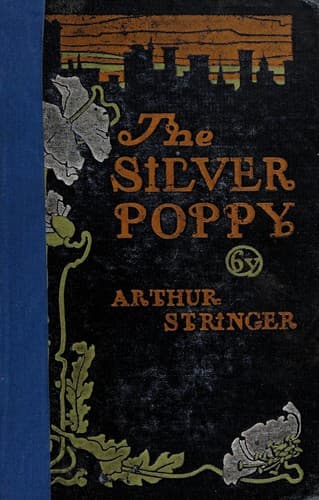
Authors -- Fiction; Canadian fiction; Impostors and imposture -- Fiction; New York (N.Y.) -- Social life and customs -- Fiction
Hartley could not leave his humble East Side room without a pang or two
of regret. One can never turn over such a page in life, he knew, without
a touch of sorrow for the chapter that is closed. He felt that he was
losing the companionship of those whom a common poverty had drawn
closely about him. He felt, too, that it was the death of the democrat
in him. He had grown to take an unworded pride in classing himself as
one of the People. There could be no more of the "glad confident morning
again." And if, at times, he had rebelled against the squalor and
discomfort of that older life, yet now, when the hour for stepping out
of and above it had arrived, he hesitated still again before taking the
upper path into that new and untried world. The heat and dust and
clangor of the busy streets, the cries and odors where men and women
hived closely together, the wailing of young and neglected children, the
sense of feverish movement and stir, the hum of the ceaseless
machines--all these in the old days had entered into his life and had
brought with them a riddle which he had not quite read, a lesson which
he had not quite learned. And life there, too, had known its shreds and
patches of color. With all its poverty there was a Southern air of
gaiety and lightness about this New World East Side. It had none of the
dismal and monotonous hideousness and the hopelessness of a Bethnal
Green and a Whitechapel. He felt that he was stepping out to light and
to liberty, yet taking with him a heavy heart--a heart that had almost
grown to love its very cell. And after all, was it liberty? The softer
side of life had not been unknown to him, and had not brought him
happiness in the old days. A touch of the flagellant in him still
turned his eyes toward the more buffeting existence, while at the same
time the artist, the apostle for form, cried out in him for its leisured
contemplation. Yet better to be the crystal and be broken, he felt, than
the tile upon the housetop.
And John Hartley was not altogether and unrestrictedly happy during that
first hour in his new apartment.
While these thoughts were running tumultuously through his mind Mrs.
Spaulding, the embodiment, he felt, of the spirit of his newer
existence, looked wonderingly out over her pearl-gray boa at him and
waited for him to speak. He had taken it all very quietly. She did not
know whether to be pleased or annoyed; Cordelia had accustomed her to
gratitude in its more demonstrative form. She had expected, perhaps, a
little more effusion on the part of her new _protégé_. He, on his part,
did not see that more remained to be said.
Mrs. Spaulding continued to look at him with musing eyes. He had always
seemed to her to have the manners of another century. There were times
when his stiffness irritated her.
"Are all Englishmen alike?" she asked.
"Why?"
"Because sometimes I feel that I'd like to give you a good shaking, just
to joggle you out of your shell for a few minutes."
Public-domain text, read in full here on John Shaqi.
Reviews
Reviews
No reviews yet
Be the first to share your thoughts on this work.
Elsewhere in the archive
Join the Discussion
Join the discussion
Sign in to leave a comment or review.
Sign InorCreate an account