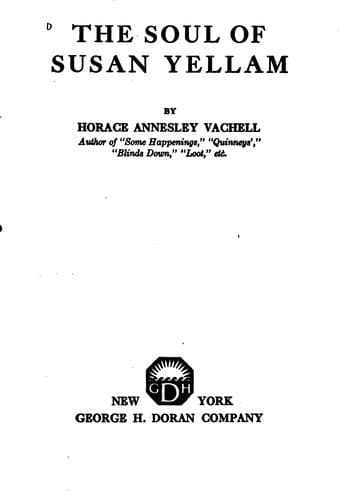
England -- Social life and customs -- 20th century -- Fiction; Villages -- England -- Fiction; World War, 1914-1918 -- Fiction
Consider Armageddon how he might and did, from every point of view which
presented itself to an active and prescient brain,--the material outlook
of diplomatists struggling to adjust the balance of European powers, of
monarchs gazing at tottering thrones, of politicians still grabbing
loaves and fishes, of business men thinking of their tills, of the rank
and file in all countries working apathetically for their daily
bread,--this thought rose up and dominated others. To him and men like
him, ardently concerned with the potentialities of souls, ordained
teachers of God's Word, called upon to interpret, so far as they could,
the mysterious designs of Omnipotence, the issues shone clearly forth.
Evil was arrayed against Good. The pomps and vanities of the world were
marshalled against the powers of the Spirit.
And, in the end, the Spirit would triumph.
He began his sermon.
The Squire, meanwhile, was approaching the _Sir John Barleycorn_ tavern,
intending to have a word with William Saint, and, later on, with Susan
Yellam and others, whom he regarded as aides-de-camp. Not being a very
judicious reader of character, indolently disposed (because he was so
busy himself) to accept his own people as they appeared to be, he
regarded William Saint as a respectable, intelligent publican, who had
been an excellent servant as first footman at the Court. He counted upon
William as a likely "whipper-in" in the hunt for recruits. The Boniface
of the _Pomfret Arms_, the larger of the two Nether-Applewhite taverns,
happened to be stout and scant o' breath. He seldom stirred out of his
snug bar-parlour. William Saint scoured the countryside, a very
energetic, enterprising fellow.
"Morning, William."
"Good morning, Sir Geoffrey."
The Squire removed his hat and wiped an ample brow. He had found Saint
in the sanded tap-room, overhauling supplies. He noted the man's drab
complexion, and wondered whether he consumed too much of his own beer.
The publican asked his old master deferentially if he would drink a
glass of ale. Time was when the Squire never refused such invitations.
To-day, he declined the ale, saying trenchantly:
"No, no. We shall have to tighten our belts, William. Take my word for
it. You must reckon with being hit. We shall all be hit in our purses
and our stomachs."
William Saint agreed politely. He had no intention of being hit in
either place, but he kept that to himself. Already he was secretly
enrolled amongst the would-be profiteers, and resolutely determined to
extract good from an ill wind. Sir Geoffrey stated the nature of his
errand. The village must set an example to less beatified hamlets, such
as Ocknell, for example. Did William think the younger men would come
forward with enthusiasm? William was doubtful about the enthusiasm. With
discreet pressure from Authority, they might be induced to follow the
example of George Mucklow. The Squire slapped his thigh.
Public-domain text, read in full here on John Shaqi.
Reviews
Reviews
No reviews yet
Be the first to share your thoughts on this work.
Elsewhere in the archive
Join the Discussion
Join the discussion
Sign in to leave a comment or review.
Sign InorCreate an account