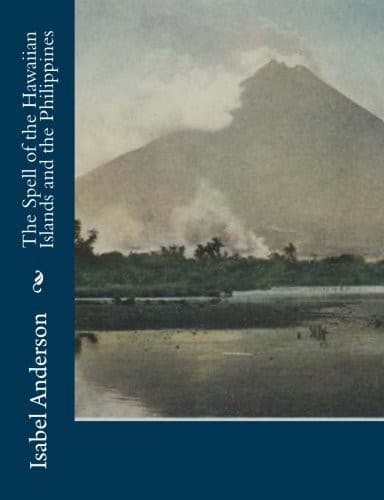
The Spell of the Hawaiian Islands and the PhilippinesAnderson, Isabel
History
The Spell of the Hawaiian Islands and the Philippines
Anderson, Isabel
Hawaii; Philippines
As we landed in Manila early Sunday morning, we were in time for service
in the Episcopal cathedral, which had just been built. This is a
handsome building in the Spanish style, large and airy, with an
effective altar. It was erected by an American friend of Bishop Brent,
the Episcopal bishop, who has done fine work in the Islands. According
to a story that is related of this good man, he made a journey at one
time into the interior of Luzon, where he found the natives sadly in
need of instruction in ways of personal cleanliness. As soon as he
reached the mail service again, he wrote to America for a ton of soap,
which was duly shipped to him and used for the purification of the
aborigines.
I was glad to visit also Bishop Brent's orphan school, consisting
principally of American-mestizo children. The native women, when
deserted by their white lovers, generally marry natives, who often
ill-treat these half-white children, and sometimes sell them as slaves.
Miss Sibley, of Detroit, was in charge of this school, which was in a
big, comfortable house near the native shacks on the edge of the town,
and had twelve pupils at that time.
A convent of Spanish nuns on a small island in the river, interested me
greatly. It was then under the supervision of the government, for it was
at that time not only a convent but also a poorhouse, a school for
orphans, an asylum for insane men and women, and a reformatory for bad
boys. The embroidery done at the convent was better than that made by
the natives in their houses, as the thread used was finer. The nuns
charged more than the natives, but they would also cut and sew, thus
finishing the garments. Articles embroidered by native women were never
made up by them, but had to be taken to a Chinese tailor.
The linen must first be bought, however, so I tried to do a little
shopping in the city, but found it very unsatisfactory. The shops are
poor, and, as one traveler has said, you can get nothing you want in
them, but plenty of things you don't want, for which you can pay a very
high price.
One day I was taken to a cockpit, where a cockfight was to come off.
This is one of the characteristic amusements of the Filipinos, which
they have engaged in since the year 1500. It is so popular that it would
be difficult to put a stop to it all at once, but it has been restricted
by the government to Sundays and legal holidays, which is something of a
victory. (They are also passionately fond of horse racing, in regard to
which other restrictions have been made.) Outside, beggars, old and
blind, were crawling over the ground; natives strolled around, petting
their birds, which they carried under their arms; and vendors with dirty
trays of sweetmeats wandered about. We bought our tickets and passed
into the rickety amphitheater.
Public-domain text, read in full here on John Shaqi.
Reviews
Reviews
No reviews yet
Be the first to share your thoughts on this work.
Elsewhere in the archive
Join the Discussion
Join the discussion
Sign in to leave a comment or review.
Sign InorCreate an account