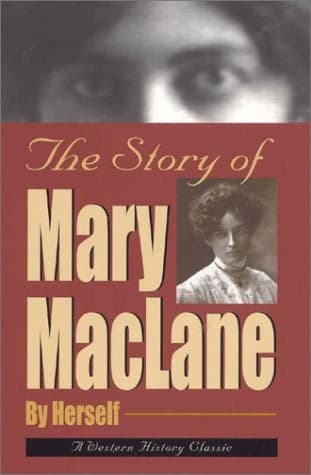
I have only two stipulations: that the person to whom it belongs
does not need it pressingly, and that there is not the smallest
chance of being found out. (And of course I could not think of
stealing from my one friend.)
It would be extremely inconvenient to be known as a thief, merely.
When the world knows you are a thief it blinds itself completely
to your other attributes. It calls you a thief, and there’s an
end. I am a genius as well as a thief--but the world would quite
overlook that fact. “A thief’s a thief,” says the world. That is
very true. But the mere fact of being a thief should not exclude
the consideration of one’s other traits. When the world knows you
are a Methodist minister, for instance, it will admit that you may
also be a violinist, or a chemist, or a poet, and will credit you
therefor. And so if it condemns you for being a thief, it should at
the same time admire you for being a genius. If it does not admire
you for being a genius, then it has no right to condemn you for
being a thief.
--And why the world should condemn any one for being a thief--when
there is not within its confines any one who is not a thief in
some way--is a bit of irony upon which I have wasted much futile
logic.--
I am not trying to justify myself for stealing. I do not consider
it a thing that needs to be justified, any more than walking or
eating or going to bed. But, as I say, if the world knew that I
am a thief without being first made aware with emphasis that I am
some other things also, then the world would be a shade cooler for
me than it already is--which would be very cool indeed.
And so in writing my Portrayal I have dwelt upon other things at
some length before touching on my thieving propensities.
None of my acquaintances would suspect that I am a thief. I look
so respectable, so refined, so “nice,” so inoffensive, so sweet,
even!
But, for that matter, I am a great many things that I do not appear
to be.
The woman from whom I stole the three dollars, if she reads this,
will recognize it. This will be inconvenient. I fervently hope she
may not read it. It is true she is not of the kind that reads.
But, after all, it’s of no consequence. This Portrayal is Mary
MacLane: her wooden heart, her young woman’s-body, her mind, her
soul.
The world may run and read.
I will tell you what I did with the three dollars. In Dublin Gulch,
which is a rough quarter of Butte inhabited by poor Irish people,
there lives an old world-soured, wrinkled-faced woman. She lives
alone in a small, untidy house. She swears frightfully like a
parrot, and her reputation is bad--so bad, indeed, that even the
old woman’s compatriots in Dublin Gulch do not visit her lest they
damage their own. It is true that the profane old woman’s morals are
not good--have never been good--judged by the world’s standards.
She bears various marks of cold, rough handling on her mind and
body. Her life has all but run its course. She is worn out.
Public-domain text, read in full here on John Shaqi.
Reviews
Reviews
No reviews yet
Be the first to share your thoughts on this work.
Join the Discussion
Join the discussion
Sign in to leave a comment or review.
Sign InorCreate an account