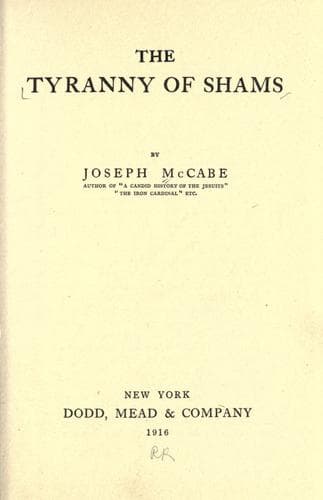
Great Britain -- Social conditions; Moral conditions; Social problems
That section of the political machine which controls national affairs
is obviously of the first importance. On its working rests the grave
issue of peace or war; to it is entrusted, in the last resort, the
great task of educating the nation; and through it alone can we secure
any of those numerous reforms which are to undo the tyranny of shams
and abolish so much avoidable misery and confusion. One ought
therefore to be gratified to see how large a place politics occupies
in the public mind, which is otherwise so little inclined to serious
matters, and in the public press, which so faithfully mirrors the
thought of the nation: to see how the prominent or eloquent politician
surpasses in public esteem the greatest artist or scientist, and even
rivals in popularity the prettiest actress of the hour: to see that
four-fifths of our public honours are reserved for politicians and
statesmen, and for those less gifted but more wealthy men who give
them practical support. Unhappily, when one looks closely into this
apotheosis of politics, one finds that its merit is merely
superficial: that a very large proportion of the more thoughtful
people in every civilised community look on politics with disdain, and
that some of the more independent of our politicians confess that one
must almost lay aside one's honesty and ideals on entering the
political world.
A series of grave struggles and threats of civil war in the first half
of the nineteenth century inaugurated the present political phase in
Europe. It transpired after Waterloo that the English parliamentary
system, in which our statesmen took such pride, was a hollow and
corrupt sham. A comparatively few wealthy landowners controlled the
nation, and bought votes for their nominees. After some years of
agitation the working men of the great manufacturing centres formed
armies and threatened to force the doors of Westminster at the point
of the pike. This elicited a system of restricted, but real, popular
representation. Later enlargements of the franchise improved the
system, and to-day some six or seven million adult males elect our
legislators. Until recently this scheme was largely frustrated by the
power of a non-elected House to suppress any measure which did not
please a privileged minority, but this is now materially modified. Six
million free and adult representatives of the nation appoint and
control the men who make our laws, and direct the king how to act.
Public-domain text, read in full here on John Shaqi.
Reviews
Reviews
No reviews yet
Be the first to share your thoughts on this work.
Join the Discussion
Join the discussion
Sign in to leave a comment or review.
Sign InorCreate an account