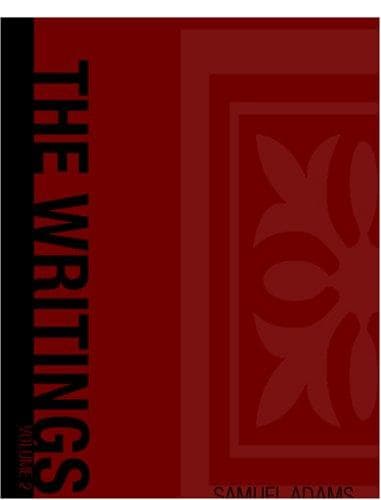
The Writings of Samuel Adams - Volume 2Adams, Samuel
History
The Writings of Samuel Adams - Volume 2
Adams, Samuel
United States -- Politics and government -- 1775-1783; United States -- Politics and government -- 1783-1809
It was a question put by the chief magistrate of this province to the
officer who commanded on that bloody evening. “Did you not know that
you should not have fired without the order of a civil magistrate”.
And it was sworn in court in the case of Capt. Preston, that he
answered, “I did it to save my Sentry”: But whatever his answer was,
or however “unsatisfactory” to his Honor, the question plainly implies
that it was the judgment of his Honor, that the soldiers could not
justify themselves in firing upon the people without the order of the
civil magistrate. Yet they did fire without such orders, and killed
five of his Majesty’s good subjects; most, if not all of whom were at
that time, for aught that has yet appear’d, in the peace of God and
the King! They not only fired without the orders of the civil
magistrate, but they never called for one, which they might easily
have done--They went down of their own accord, arm’d with musquets,
and bayonets fix’d, presuming that they were cloath’d with as much
authority by the law of the land, as the Posse Comitatus of the
country with the high sheriff at their head--How little regard is due
to the word fo a m--r, who would fain have flatter’d us into a belief
that the troops were sent here to aid the civil magistrate, and were
never to act without one? And let me observe, how fatal are the
effects, the danger of which I long ago mention’d, of posting a
standing army among a free people!
If his Honor was not mistaken in his judgment, and I presume he was
not, viz. that it was unlawful for them to fire without the order of
the civil magistrate, they were certainly from the beginning, at
least very imprudent and fool-hardy, in going down, arm’d as they
were, with weapons of death, without the direction of the civil
magistrate; especially, if they intended to fire, as I think it is
manifest they did.-- When Captain Preston was asked, Whether the
soldiers intended to fire, he answer’d they could not fire without
his orders: No one will pretend that they had not strength or skill
to pull their trickers; but by the rules of the army, their own rules,
they were restrained from firing till he first gave them orders: Yet
contrary to those very rules they all did fire; all but one, and he
did all he could to fire, for his gun flush’d in the pan--it is said
that when it was urg’d by the council for the crown, that by the
rules of law they ought to have retreated if they were in danger of
their lives; it was answered, that by the rules of the army they
were chain’d as it were to their post--that they dared not to retreat
without the orders of their captain--that in so doing they would have
‘expos’d themselves to a sentence of death in a court martial:’--Yet
we have it from great authority that they would have been distracted
if they had not fired, upon a supposition that they were in danger;
altho’ by the same rules of war they could not have fired any more
Public-domain text, read in full here on John Shaqi.
Reviews
Reviews
No reviews yet
Be the first to share your thoughts on this work.
Elsewhere in the archive
Join the Discussion
Join the discussion
Sign in to leave a comment or review.
Sign InorCreate an account