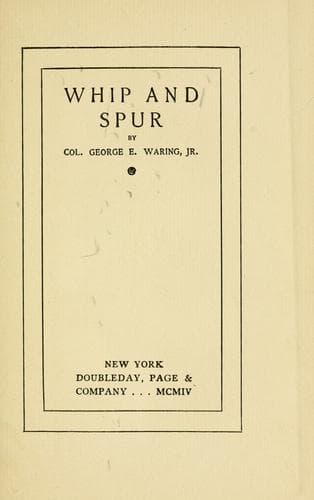
Fox hunting; Horses; United States -- History -- Civil War, 1861-1865 -- Personal narratives
More than once, when our patrols reported the immediate presence of
the enemy, Pat would turn up with the assurance that it was only
so-and-so's "band," who had come into the neighborhood on a visiting or
a marauding expedition, but with no intention of putting themselves in
our way; and invariably we found his report to be correct. Indeed, so
frequently did this happen that we became almost too confident in his
assistance, and when an excitable picket shot at a donkey or a cow in
the night-time, although the patrol of the guard went through the usual
routine of investigation, we felt that there could be no serious attack
or Dixon would have notified us.
How he obtained his information we could not guess, and his own
account of the matter was never satisfactory; but I believe that no
considerable force of the enemy ever crossed the Memphis and Charleston
Railroad (the whole State's width to the south of us) without our
being speedily notified; and through this means we were several times
enabled to telegraph to Columbus early information of contemplated
raids,--information that was not always heeded, as the surprise of
Paducah (on the Ohio River) several days after our warning sufficiently
proved.
One ambition of this worthy man had to remain unsatisfied. How little
this was due to the fact that we at the headquarters were all perfectly
mounted, modesty makes it improper to state here; but in our frequent
meetings as we rode outside the lines, he rarely failed to tell of
some particularly fine horse belonging to some particularly bad man
and especially virulent Rebel, which it would really be a virtue to
"confisticate." The worthy fellow was not satisfied with his own
conspicuous appropriations; he would fain have mounted our regiments on
the weedy screws which the Rebel impressments had left for the horsing
of the crippled region of Western Tennessee. Possibly, too, he may have
had some lurking fear that there was a suspicion of iniquity in his
thefts, and longed for the reassurance of similar conduct on the part
of true men like ourselves.
It was, of course, not long after the commencement of this active
campaign against the rights of ownership, that we began to receive
assurances on every hand that unless we could do something to repress
Pat Dixon's vagabondage an outraged people would take the law into
their own hands, and avenge the wrongs he had inflicted. With a
laudable desire to prevent unnecessary bloodshed, I told him one day of
the state of feeling against him, urging him to be more circumspect and
to conduct himself like a decent man, else he would be hanged the first
time he was caught; intimating, too, that it would be improper for us
to continue to employ him to such needless injury to an inoffensive
people. His reply was characteristic.
Public-domain text, read in full here on John Shaqi.
Reviews
Reviews
No reviews yet
Be the first to share your thoughts on this work.
Elsewhere in the archive
Join the Discussion
Join the discussion
Sign in to leave a comment or review.
Sign InorCreate an account