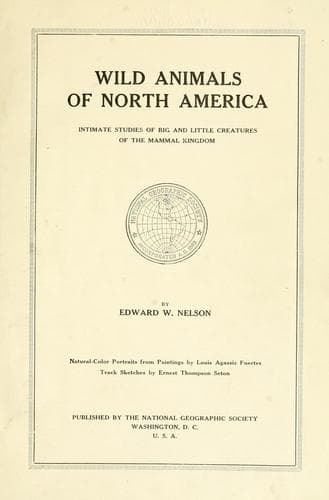
Wild Animals of North America: Intimate Studies of Big and Little Creatures of the Mammal KingdomNelson, Edward William
Science
Wild Animals of North America: Intimate Studies of Big and Little Creatures of the Mammal Kingdom
Nelson, Edward William
Mammals -- North America
The coyote supplies much interest and local color to many dreary
landscapes and has become a prominent figure in the literature of the
West. There it is usually symbolic of shifty cunning and fleetness of
foot. Whatever his faults, the coyote is an amusing and interesting
beast, and it is hoped that the day of his complete disappearance from
our wild life may be far in the future.
ARIZONA, OR MEARNS, COYOTE (Canis mearnsi)
The Arizona coyote is one of the smallest and at the same time the
most handsomely colored of all its kind. Its home is limited to the
arid deserts on both sides of the lower Colorado River, but mainly
in southwestern Arizona and adjacent parts of Sonora. This is one of
the hottest and most arid regions of the continent, and for coyotes
successfully to hold their own there requires the exercise of all the
acute intelligence for which they are noted. Instead of the winter
blizzards and biting cold encountered in the home of the plains coyote,
this southern species has to endure the furnacelike heat of summer,
with occasional long periods of drought, when water-holes become dry,
plant life becomes dormant, and a large part of the smaller mammal life
perishes.
The Arizona coyote, like others of its kind, is omnivorous. In seasons
of plenty, rabbits, kangaroo rats, pocket gophers, and many other
desert rodents cost only the pleasant excitement of a short stalk.
With the changing seasons the flesh diet is varied by the sugary
mesquite beans, juicy cactus fruit, and other products of thorny desert
plants. Wherever sufficient water is available for irrigation, small
communities of Indians or Mexicans are to be found. About such centers
many coyotes usually establish themselves and fatten on poultry, green
corn, melons, and other fruits provided by the labor of man. Many of
them also patrol the shores of the Gulf of California and feast upon
the eggs of turtles and other spoils of the sea.
The arrival of men at a desert water-hole is quickly known among these
alert foragers, and when the travelers arise at daybreak they are
likely to see tell-tale tracks on the sand where one or two coyotes
have walked in and out between their sleeping places and all about
camp. Shortly afterward the campers, if inexperienced, may learn that
bacon and other food are contraband and always confiscated by these
dogs of the desert. These camp marauders often stand among the bushes
only 75 or 100 yards away in the morning and watch the intruders with
much curiosity until some hostile movement starts them off in rapid
flight.
WHITE, OR ARCTIC, FOX (Alopex lagopus)
Public-domain text, read in full here on John Shaqi.
Reviews
Reviews
No reviews yet
Be the first to share your thoughts on this work.
Join the Discussion
Join the discussion
Sign in to leave a comment or review.
Sign InorCreate an account