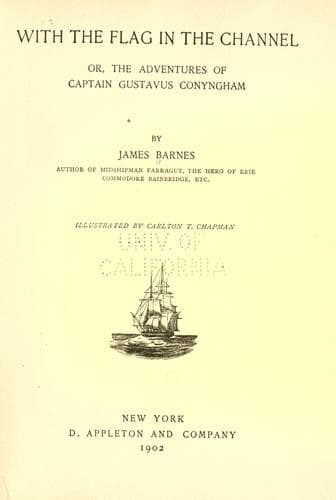
With the Flag in the Channel; or, The Adventures of Captain Gustavus ConynghamBarnes, James
History
With the Flag in the Channel; or, The Adventures of Captain Gustavus Conyngham
Barnes, James
United States -- History -- Revolution, 1775-1783 -- Juvenile fiction
The firm of Hortalez and Company received word from their Spanish
agents and the representatives of Lazzonere and Company that four
English vessels--two brigs, a large lugger, and a ship (the last a most
valuable prize)--had arrived at Corunna, all sent in within a week
after the sailing of the Revenge. So well had everything been arranged
that there was a ready sale. Vessels and cargoes were disposed of
without a hitch to Spanish and French merchants, in many cases auctions
being held on the public wharves. Two weeks more and eight other prizes
were added to the list.
England was now in a storm of indignant protest. The Admiralty was
besieged with letters, and ship-owners and insurance people, frightened
at the prospect of further losses, showed signs of panic. Vessels
already loaded and ready for sailing were held in port until they
could sail, under convoy of an armed guard-ship. Insurance rates rose
twenty-five per cent. And all this time a little, fast-sailing craft
drove up and down the Channel, occasionally flaunting the rattlesnake
flag almost in sight of the fleets that lay at anchor in the roadways.
And so we find her on one bright day in August, still in sight of the
white cliffs, but heading southwest in chase of a deep-laden vessel
whose suspicions had been aroused, for she was staggering along under a
press of snow-white canvas.
Conyngham had gone forward to the forecastle and was watching the
chase through his spy-glass. The crew, much reduced in numbers by
reason of manning the prizes, watched him carefully. There had been
something about the set of the stranger’s canvas that had suggested
the man-o’-war, and now--although, as we have said, she had all sail
set--she seemed to display a slowness that was puzzling, for hand over
hand the Revenge picked up on her. The six-pounders and the swivels had
been cast loose and provided, and the men were only waiting the orders
to take their stations. There was a ponderous sea running, and the
armament of the Revenge was practically useless except at short range.
Time and again had the captain longed for a bow gun, and he would
have exchanged half of his broadside for a long twelve-pounder. They
were within two miles of the vessel now, and for the last few minutes
Conyngham had not taken his eye from the glass, crouching, or at least
half kneeling, against the bow-sprit in order to steady himself. The
lower sails were wet with the spray that dashed up from the bows,
and he himself was soaked almost to the skin. Suddenly he arose and
shouted some orders hurriedly. The Revenge came up into the wind as if
abandoning the chase. The second mate, who stood beside the helmsman,
saw the captain come running aft.
“She’s a man-o’-war brig!” cried Conyngham. “I thought as much. She has
a drag out to hold her back.”
“There she comes about,” answered the second mate. “Now we can see her
teeth. You’re right, sir. She hoped to bring us up to her. Hadn’t we
better run for it?”
Public-domain text, read in full here on John Shaqi.
Reviews
Reviews
No reviews yet
Be the first to share your thoughts on this work.
Elsewhere in the archive
Join the Discussion
Join the discussion
Sign in to leave a comment or review.
Sign InorCreate an account