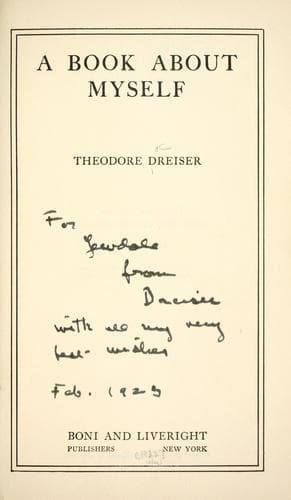
Dreiser, Theodore, 1871-1945; Journalists -- United States -- Biography; Novelists, American -- 20th century -- Biography
I had forgotten, or did not know, or the fact did not make a
sufficiently sharp impression on me, that this was a panic year (1893)
and that there were hundreds of thousands of men out of work, the
country over. Indeed, trade was at a standstill, or nearly so. When I
first went on the _Republic_, if I had only stopped to remember, many
factories were closing down or slowing up, discharging men or issuing
scrip of their own wherewith to pay them until times should be better,
and some shops and stores were failing entirely. It had been my first
experience of a panic and should have made a deep impression on me had I
been of a practical turn, for one of my earliest assignments had been to
visit some of the owners of factories and stores and shops and ask the
cause of their decline and whether better times were in sight.
Occasionally even then I read long editorials in the _Republic_ or the
_Globe_ on the subject, yet I could take no interest in them. They were
too heavy, as I thought. Yet I can remember the gloom hanging over
streets and shops and how solemnly some of the manufacturers spoke of
the crisis and the hard times yet in store. There were to be hard times
for a year or more.
I recall one old man at this time, very prosy and stiff and
conventional, “one of our best business men,” who had had a large iron
factory on the south side for fifty years and who now in his old age had
to shut down for good. Being sent out to interview him, I found him
after a long search in one of the silent wings of his empty foundry,
walking about alone examining some machinery which also was still. I
asked him what the trouble was and if he would resume work soon again.
“Just say that I’m done,” he replied. “This panic has finished me. I
could go on later, I suppose, but I’m too old to begin all over again. I
haven’t any money now, and that’s all there is to it.”
I left him meditating over some tool he was trying to adjust.
In the face of this imagine my gayly inviting my two brothers to this
difficult scene and then expecting them to get along in some way,
persuading them to throw up whatever places or positions they had in
Chicago! Yet in so doing I satisfied an emotional or psychic longing to
have them near me and to do something for them, and beyond that I did
not think.
Public-domain text, read in full here on John Shaqi.
Reviews
Reviews
No reviews yet
Be the first to share your thoughts on this work.
Elsewhere in the archive
Join the Discussion
Join the discussion
Sign in to leave a comment or review.
Sign InorCreate an account