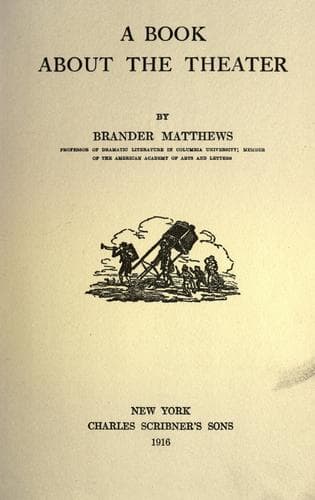
Drama -- History and criticism; Theater; Theater -- History
The final distinction between literature and journalism is to be sought
in their diverging and irreconcilable objects. The desire of the former
is for permanence, and the aim of the latter is the immediate
impression. When literature triumphs it is for all time--more or less.
When journalism most completely achieves its purpose its success is
temporary, to be retained only by iteration and reiteration, since it
has for its target the events of the fleeting moment. If we admit this
distinction between journalism and literature, we have no difficulty in
discovering journalism in many places other than the daily and weekly
papers; very properly it fills the most of the space in the monthly
magazines, and even in the quarterly reviews; and it abounds in our
book-stores, since only a small proportion of the volumes which pour
from the press every year possess the combined substance and style, the
solidity of matter and the delightfulness of manner which lift mere
writing up to the loftier level of literature.
On the other hand, we may find literature of inexpugnable quality, not
only in the magazines, but also now and again in the newspapers. Drake's
'American Flag' and Kipling's 'Recessional' appeared in daily journals,
and so did the literary criticism of Sainte-Beuve and the dramatic
criticism of Lessing and of Lemaître. But these were but happy
accidents, and the great newspaper editor has rarely striven to make his
journal a persistent vehicle for the publication of literature. He feels
that this is foreign to his main purpose, and he is content when his
editorial articles, and his news stories are vigorous and
picturesque--clean, clear, and cogent in their English. He knows, better
than any one else, that it is not by its external literary merits that
newspaper-writing is to be judged. What he wants above all else is the
news, all the news, and nothing but the news--accompanied, of course, by
the obligatory comment this news may deserve. He needs editorial
writers, reporters, and correspondents who are newspaper men, and not
men of letters, except in so far as these men of letters may have
accepted the special conditions of newspaper work.
Public-domain text, read in full here on John Shaqi.
Reviews
Reviews
No reviews yet
Be the first to share your thoughts on this work.
Elsewhere in the archive
Join the Discussion
Join the discussion
Sign in to leave a comment or review.
Sign InorCreate an account