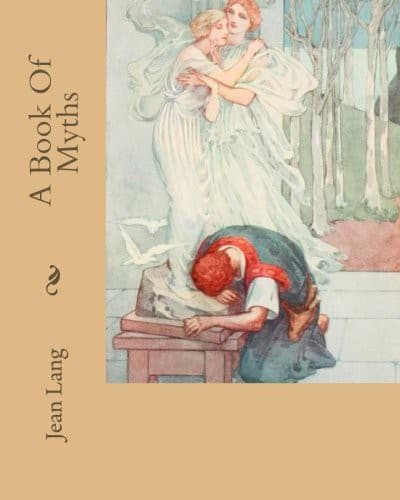
Mythology; Mythology, Greek -- Juvenile literature
And Odin, seeing himself outwitted and knowing that honour bade him
follow the Northern custom and give the people he had named a gift,
bestowed on the Longbeards and their men the victory that Freya
craved. Nor was the gift of Odin one for that day alone, for to him
the _Langobarden_ attributed the many victories that led them at last
to find a home in the sunny land of Italy, where beautiful Lombardy
still commemorates by its name the stratagem of Freya, the queen.
With the coming of Christianity, Freya, the Beloved, was cast out
along with all the other old forgotten gods. The people who had loved
and worshipped her were taught that she was an evil thing and that to
worship her was sin. Thus she was banished to the lonely peaks of the
mountains of Norway and of Sweden and to the Brocken in Germany, no
longer a goddess to be loved, but transformed into a malignant power,
full of horror and of wickedness. On Walpurgis Night she led the
witches' revels on the Brocken, and the cats who were said to draw her
car while still she was regarded as a beneficent protectress of the
weak and needy, ceased to be the gentle creatures of Freya the Good,
and came under the ban of religion as the satanic companions of
witches by habit and repute.
One gentle thing only was her memory allowed to keep. When, not as an
omnipotent goddess but as a heart-broken mother, she wept the death of
her dearly-loved son, Baldur the Beautiful, the tears that she shed
were turned, as they fell, into pure gold that is found in the beds of
lonely mountain streams. And we who claim descent from the peoples who
worshipped her--
"Saxon and Norman and Dane are we"--
can surely cleanse her memory from all the ugly impurities of
superstition and remember only the pure gold of the fact that our
warrior ancestors did not only pray to a fierce and mighty god of
battles, but to a woman who was "loving and giving"--the little
child's deification of the mother whom it loves and who holds it very
dear.
THE DEATH OF BALDUR
"I heard a voice, that cried,
'Baldur the Beautiful
Is dead, is dead!'
And through the misty air
Passed like the mournful cry
Of sunward sailing cranes."
Longfellow.
Among the gods of Greece we find gods and goddesses who do unworthy
deeds, but none to act the permanent part of villain of the play. In
the mythology of the Norsemen we have a god who is wholly treacherous
and evil, ever the villain of the piece, cunning, malicious,
vindictive, and cruel--the god Loki. And as his foil, and his victim,
we have Baldur, best of all gods, most beautiful, most greatly
beloved. Baldur was the Galahad of the court of Odin the king, his
father.
"My strength is of the strength of ten,
Because my heart is pure."
Public-domain text, read in full here on John Shaqi.
Reviews
Reviews
No reviews yet
Be the first to share your thoughts on this work.
Elsewhere in the archive
Join the Discussion
Join the discussion
Sign in to leave a comment or review.
Sign InorCreate an account